Burundi Condemns Violence Against its Citizens in Kenya After Ruto’s Trade Ban
President William Ruto's decision to bar foreigners from small-scale trading has unsettled Burundians working in Kenya, prompting Bujumbura to seek assurances from Nairobi.
 Black News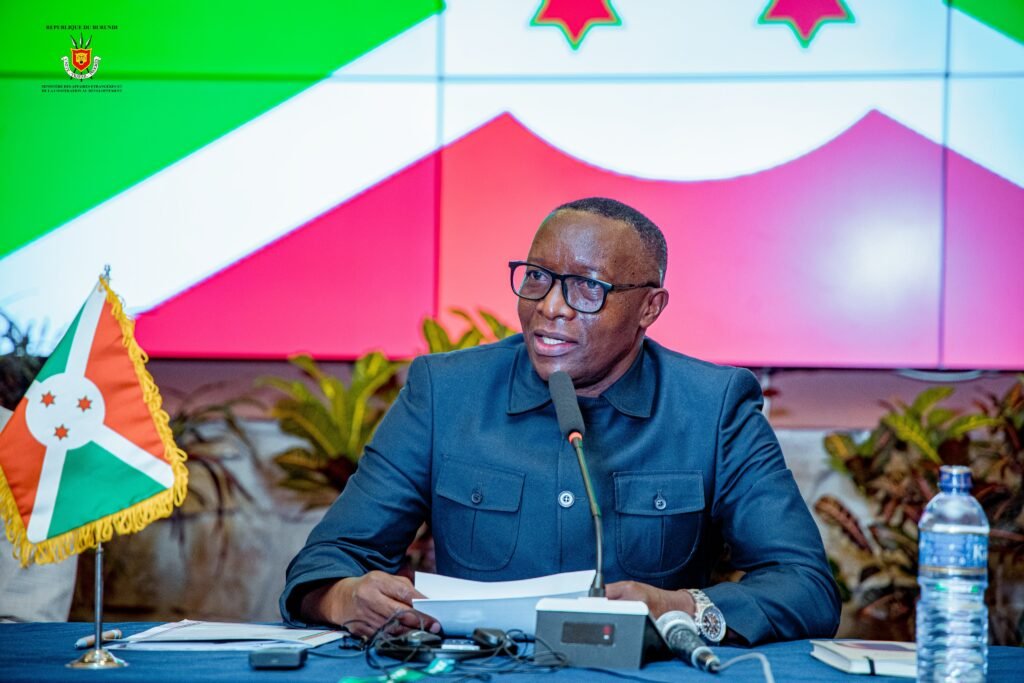
Burundi has condemned what it described as violence, vandalism and mistreatment of its citizens in Kenya following a decision by Kenyan President William Ruto to bar foreigners from engaging in small-scale trading in the country.
Burundi’s Foreign Affairs Minister Edouard Bizimana said on Saturday that the government had summoned ambassadors from East African Community (EAC) member states accredited to Burundi, including Kenya’s ambassador, to discuss the situation.
“We have already received several messages and photos showing Burundians being mistreated and their property vandalised,” Bizimana told reporters after the meeting.
He said Burundi respected Kenya’s right as a sovereign state to regulate activities within its territory, but urged Kenyan authorities to ensure that the measure did not lead to violence against foreign nationals.
“It is very sad to see acts of vandalism or looting when we belong to the same community. This does not reflect good behaviour within the EAC,” Bizimana said.
Ruto announced on Wednesday that foreigners living in Kenya would no longer be allowed to engage in small-scale trading starting Sept. 7, a move that has caused concern among Burundians who depend on petty commerce for their livelihoods.
Bizimana said reports of violence against Burundians had emerged even before the date set for implementation of the measure. He said the president had not specifically mentioned Burundians in his announcement.
“There is a risk of thinking that there is something wrong with Kenyans towards Burundians, since acts of violence quickly began against Burundians, even before the date announced by the Kenyan president,” Bizimana said.
Kenya is preparing for presidential elections in 2027, and Bizimana said that even if the government’s decision was linked to domestic political considerations, it should not result in attacks on foreigners.
He called on Kenyan authorities to issue a message of calm and prevent violence.
Burundians fear for their livelihoods
Burundian traders in Kenya said they were increasingly worried about what would happen once the measure takes effect on Sept. 7.
“We do not know what the situation will be like on September 7. But we are very worried. Please continue to pray for us,” said Kwizera, who works in a tailoring workshop.
Another trader said Burundians feared they could be targeted.
“The Kenyans are very jealous of us. We do not yet know what will happen to the person who is targeted on Monday, whether it will be death or something else,” the trader said.
Some traders said they had not been prepared to stop their businesses and lacked the money or travel arrangements needed to return to Burundi immediately.
“The problem is that we do not know where to put our goods. We risk leaving them in our kiosks and even risking our lives because we do not see how we could return to our country. The decision surprised us,” said Athanase, a second-hand shoe trader.
Kenya hosts a significant number of Burundians, many of them young people seeking employment. Some earn a living through informal trading, selling products such as eggs, doughnuts and other goods, while others work in businesses including hair salons.
Nairobi says measure applies to all foreigners
Kenya’s ambassador to Burundi told local media that the government’s decision was not directed specifically at Burundians, but applied to all foreigners engaged in the affected form of trade.
Bizimana said he had also raised the issue with the Kenyan ambassador in Burundi, asking him to convey Burundi’s concerns to his government.
“We respect the measure of every country as a sovereign state, but I asked him to ensure that no Burundian is mistreated while we are members of the same East African Community,” Bizimana told lawmakers on Thursday.
He said the Kenyan ambassador had promised to relay Burundi’s concerns to the authorities in Nairobi.
Bizimana said Burundi’s relations with Kenya had been good until the recent incidents and called for cooperation to prevent a recurrence.
“We wanted to work together to establish ‘never again’ and ensure that EAC citizens feel safe, while respecting the laws in force,” he said.
The issue was also raised in Burundi’s National Assembly on Friday during debate on an agreement with Angola concerning visa exemptions for holders of diplomatic and service passports.
Lawmakers expressed concern about what they described as increasingly restrictive measures against foreigners in some African countries.
“We are seeing African countries taking measures to close themselves off, especially when it comes to employment. What does the Burundian government think about these threats? What behaviour should Burundians adopt?” lawmaker Martin Ninteretse asked.
Bizimana told parliament that the government was aware of cases of violence against foreigners in several African countries.
He also referred to recent attacks and property losses involving foreigners in South Africa, saying Burundi did not support such actions.
Embassy offers free travel documents
Meanwhile, the Burundian embassy in Kenya announced on Saturday that it would issue free laissez-passers to Burundian nationals wishing to return home.
According to a statement from the embassy, the documents will be issued from Sept. 7 between 9 a.m. and 2 p.m. at the embassy’s offices in Kilimani, on Denis Pritt Road, near Gracia Garden Hotel.
Applicants who submit their requests on Sept. 7 will collect their laissez-passers the following day, while those who do not appear on Sept. 7 will have to return the next day to submit their applications.
Burundians have increasingly travelled to other African countries in search of employment amid high unemployment at home. But some have faced accusations of working illegally, overstaying visas or taking jobs viewed as belonging to local citizens.
Burundi has also recently required foreigners living in the country to obtain residence cards.
Bizimana urged Burundians travelling abroad to inform Burundian authorities as soon as they encounter problems so that nearby diplomatic missions can intervene quickly.
This article was updated with the latest statement from Burundi’s foreign affairs minister.







![I Placed My Black Son For Adoption After Rape — His Memoir, ‘Stranger In My Own Story,’ Helped Me Reclaim Mine [Op-Ed]](https://madamenoire.com/wp-content/uploads/sites/9/2026/09/17907998954811-rotated-e1790802025921.jpg?quality=80&strip=all&w=2448&crop=0,0,100,1322px#)