Baptiste: Saint Lucia rejected four US-proposed third-country transfers
Saint Lucia rejected four of the 10 people proposed by the United States for transfer under its third-country nationals arrangement, External Affairs Minister Alva Baptiste has disclosed. Baptiste also revealed that two of the six accepted by Saint Lucia want to return to their home countries, and the government is working with the relevant embassies […] The article Baptiste: Saint Lucia rejected four US-proposed third-country transfers is from St. Lucia Times.
 Black News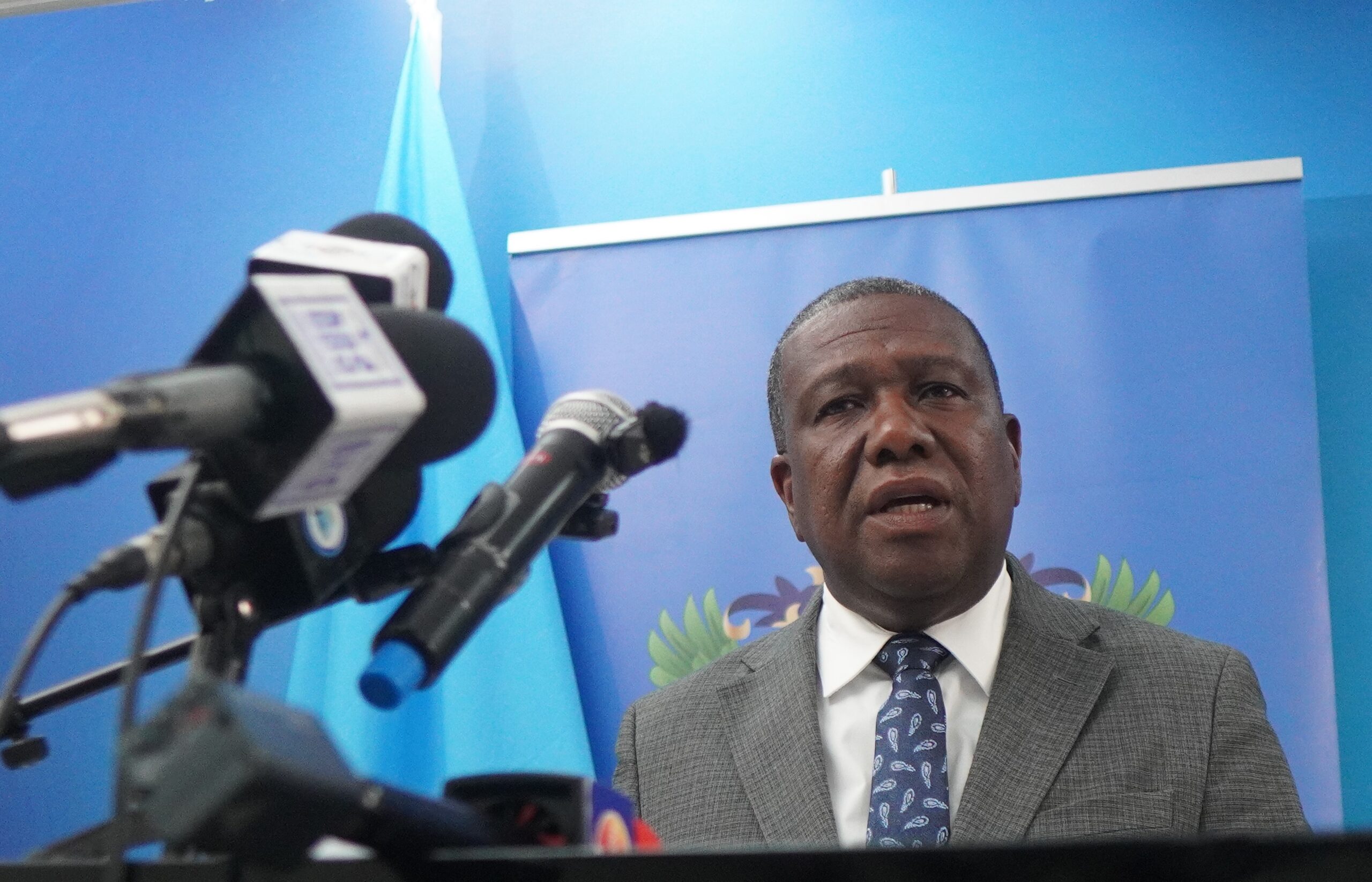
Saint Lucia rejected four of the 10 people proposed by the United States for transfer under its third-country nationals arrangement, External Affairs Minister Alva Baptiste has disclosed.
Baptiste also revealed that two of the six accepted by Saint Lucia want to return to their home countries, and the government is working with the relevant embassies to facilitate their voluntary repatriation. The other four have indicated that they wish to remain in Saint Lucia for now.
A third-country national is a person deported from one country to another that is not their country of origin.
“I wish to emphasise that under the agreement with the United States, Saint Lucia retains full discretion to review and reject any individual proposed for relocation. And in this first case, Saint Lucia did not accept all ten individuals that the US had submitted,” Baptiste said at a pre-Cabinet press briefing on Monday.
Six third-country nationals arrived in Saint Lucia last week. While their nationalities have not been disclosed, Baptiste said they are citizens of countries in Asia, Africa, and the Caribbean.
He said their transfer and reception went smoothly, with several government ministries and agencies involved, including External Affairs, Health, Equity and National Security, alongside international partners.
Baptiste also sought to address concerns about the background of the individuals received by Saint Lucia, saying government assessments had found no indication that they posed a threat to public safety or national security.
“They are certainly not criminals as has been portrayed in some circles,” Baptiste said.
The Minister described the six as people who had experienced “an out-of-the-ordinary difficulty” and very trying circumstances relating to their status in the United States, and who are now seeking an opportunity to rebuild their lives.
Temporary arrangement
Under Saint Lucia’s agreement with the United States, the country can receive up to ten third-country nationals every three months over two years.
Baptiste stressed that the arrangement is temporary and does not constitute permanent resettlement.
“We are fully cognisant that as a developing country we have real social and economic challenges, and this government does not minimise them, but our responsibility to the people of Saint Lucia and our responsibility to uphold the principles of human dignity are not competing principles. We can and must do both,” Baptiste said.
The US government has committed to covering the cost of the programme, he said, while international partners will provide additional support, including assistance with voluntary repatriation.
Baptiste said the individuals will continue to be accommodated under arrangements established by the government and its international partners, with voluntary repatriation remaining an option if any of them later decides to return home.
The Minister also stressed that Saint Lucia retains the authority to assess and reject individuals proposed by the United States.
The first transfer followed months of discussions between Saint Lucia and Washington over the country’s capacity to participate in the arrangement.
CARICOM position
Prime Minister Philip J. Pierre, who is also Chairman of CARICOM, said Monday that member states were free to make their own decisions on such arrangements.
Asked whether the issue had been discussed at the CARICOM level, Pierre said member states were free to make their own decisions.
“In terms of political policies, CARICOM member states make their own decisions. There was discussion; people discussed the agreement, but it was left to individual governments to take the decisions that they felt were right and proper,” Pierre said.
CARICOM leaders have previously raised concerns about the capacity of small states to manage the transit of third-country nationals.
They stressed that such arrangements should not disrupt regional security or divert resources and services from citizens of member states.
The United Nations’ International Organisation for Migration is responsible for the operational implementation of the programme in participating countries, while individual governments retain responsibility for matters including admission, legal stay, protection and removal.
The article Baptiste: Saint Lucia rejected four US-proposed third-country transfers is from St. Lucia Times.