AirBadminton: Taking Badminton beyond the four walls
Badminton is stepping out of the sports hall and into the open air. From 16–19 September 2026, Uganda will once again take centre stage as the host of the Africa AirBadminton Championships, with Aero Beach in Entebbe providing the setting for a continental competition that reflects how far the outdoor version of badminton has travelled. The championship […] The post AirBadminton: Taking Badminton beyond the four walls appeared first on Kawowo Sports.
 Black News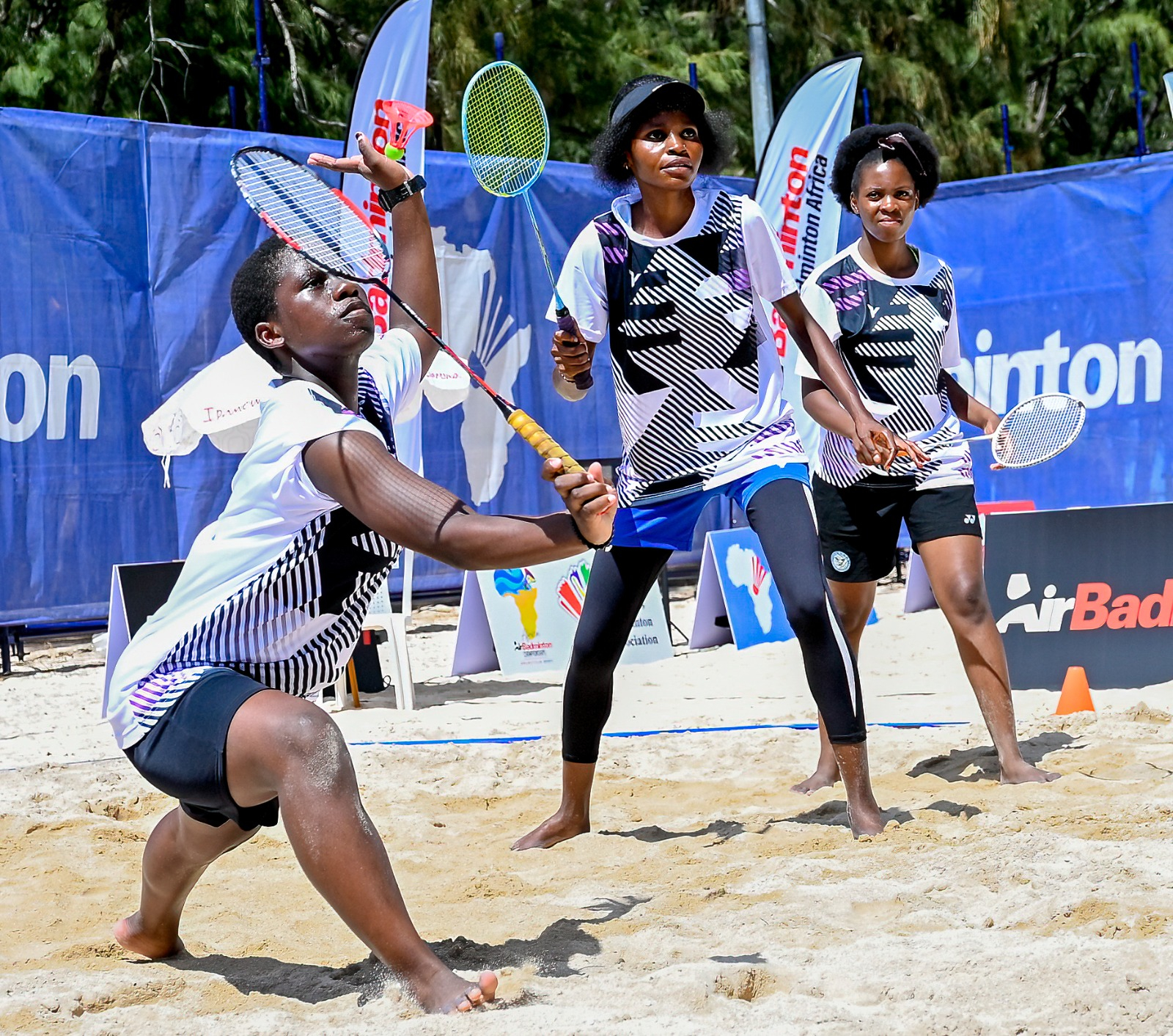

Badminton is stepping out of the sports hall and into the open air. From 16–19 September 2026, Uganda will once again take centre stage as the host of the Africa AirBadminton Championships, with Aero Beach in Entebbe providing the setting for a continental competition that reflects how far the outdoor version of badminton has travelled.
The championship will bring together 14 countries and more than 120 participants, before the action continues from 20–22 September with the Zone 5 Regional Championships and a BWF/Badminton Confederation Africa AirBadminton Training Camp.
For Uganda, however, this is more than another international tournament. It is a return to a sport that has already written part of its African story on Ugandan soil.
What exactly is AirBadminton?
Developed by the Badminton World Federation (BWF), AirBadminton is essentially badminton redesigned for the outdoors.
The concept was created to take the sport beyond conventional indoor courts and make it possible to play on sand, grass and hard outdoor surfaces, from beaches and parks to gardens, playgrounds and other suitable open spaces.
The BWF officially launched the concept in Guangzhou, China, in May 2019 together with its Global Development Partner, HSBC. A major part of the project was the development of the AirShuttle, an outdoor shuttlecock designed to be more durable and less affected by wind than the traditional shuttle.
Traditional badminton is played in a controlled indoor environment. AirBadminton accepts that the environment itself is part of the challenge.
- Wind matters.
- Sand matters.
- Sunlight matters.
- Movement matters.
The player is not simply competing against an opponent. They are also learning to read the conditions around them.
Africa’s journey with AirBadminton followed the BWF’s global rollout, with the Badminton Confederation Africa integrating the outdoor version into its development programmes.
The BCA records its first AirBadminton tournament in Africa as a friendly competition held during the All-Africa Senior Championships in Uganda in 2021. The same year, on 26 October, an AirBadminton challenge was held at MTN Arena Lugogo during the All-Africa Mixed Team Championships.
Five years later, Uganda is not merely experimenting with the concept. It is hosting a continental championship. And according to Badminton Uganda CEO Mugabe Simon, the 2026 event represents a significant step up, with the championship growing from the four countries involved at the Mauritius edition to nine in Ghana and now 14 countries in Uganda.
The growth is evident not only in the number of countries but also in the importance of the competition. Uganda’s championship is part of the qualification pathway for subsequent championships, with the leading continental teams earning qualification opportunities.
AirBadminton was deliberately designed to remove the requirement for a conventional indoor badminton hall. That matters in Africa, where access to suitable indoor sporting infrastructure remains a challenge for many communities.
A school field can become a playing area. A park can become a venue. A community space can become a court. And, as Uganda has chosen to demonstrate, a beach can become a continental championship arena.
Mugabe explains that the choice of Aero Beach is not accidental. The sport can be played on grass, concrete or sand, but the beach offers an environment associated with recreation and enjoyment while allowing more people to see and experience the sport.
It is badminton with fewer walls, literally and metaphorically. The court is different. So is the game.
AirBadminton’s court measures 16 metres by 6 metres for doubles and triples, while singles uses a 16-metre by 5-metre court.
But the most interesting addition is the dead zone beside the net. The two-metre area is designed to discourage players from attempting shots too close to the net, where controlling the AirShuttle outdoors can be difficult. Players cannot step into the zone to make a stroke, although they can land or step into it after completing a legal stroke before returning to their playing area.
The game also introduces three formats:
- Singles — one player against one.
- Doubles — two against two.
- Triples — three against three.
Triples is arguably the format that gives AirBadminton its most distinctive identity.
A player cannot make two consecutive returns. Once one player makes a return, a teammate must make the next one.
That seemingly small rule changes everything. Players must communicate constantly. They must anticipate where the next shuttle is going, understand their teammates’ positions and cover the court collectively.
It becomes less about one player producing the perfect shot and more about three players creating the perfect sequence.
The recommended BWF scoring format is best-of-five games. Each game is played to 11 points, although at 10-all a side must win by two clear points. At 12-all, the next point wins, giving the game a maximum score of 13. The first side to win three games takes the match.
A bad serve, a shuttle into the dead zone, a shot out of bounds, a failure to clear the net or an illegal touch can immediately hand the opposition a point.
In triples, hitting two consecutive returns is another fault. There is little room for careless play because possession does not simply change hands after a mistake; the opponent gets the point.
Perhaps the biggest adjustment for conventional badminton players is learning to play with the wind rather than simply wishing it away.
The AirShuttle has been designed to reduce the effect of wind, but outdoor conditions remain a tactical factor. Players have to read wind direction and strength, then adjust the angle and power of their strokes accordingly.
A shot that is comfortable indoors may suddenly behave differently outdoors.
On sand, there is another challenge: movement. Every change of direction, every recovery and every chase demands more from the legs. The surface changes not only where the shuttle goes, but how the player gets there.
This is why AirBadminton should not be dismissed as badminton played casually outside. It is a different competitive proposition.
Uganda enters the 2026 championship with experience and expectations.
The national team comprises four boys and four girls, with the players required to compete in doubles and triples. Mugabe says the team is largely the same group that won gold in Mauritius, although there have been a few changes.
According to Badminton Uganda, the team has been preparing for more than three months, with training conducted at Mbogo High School under coach Kabindi.
Uganda’s challenge, however, is not simply to repeat what it achieved before. As Mugabe points out, the players who were once chasing Uganda have now had two years to train and improve. The Ugandan side therefore cannot afford to treat its previous success as a guarantee of another title.
That is where the 2026 championship becomes particularly interesting. Uganda is the host. Uganda is a former champion. But Uganda is also being hunted. And this time, the chase takes place on the sand at Aero Beach.
The post AirBadminton: Taking Badminton beyond the four walls appeared first on Kawowo Sports.