The turkey gets the photographs, but Thanksgiving is won on the side dishes. If the usual lineup of mashed potatoes, cornbread and candied yams has started to feel like a routine, African kitchens have a counterpart for nearly every one of them.
These 10 African side dishes for Thanksgiving come from Kenya, South Africa, Nigeria, Ghana and Cameroon. Each one fills a familiar slot on the table, so you can swap in one or two or build the whole spread around them, and most can be made ahead.
ALSO READ: 11 African Pumpkin Recipes for the Holiday Season
10 African Side Dishes for Thanksgiving
1. Irio (Kenya)
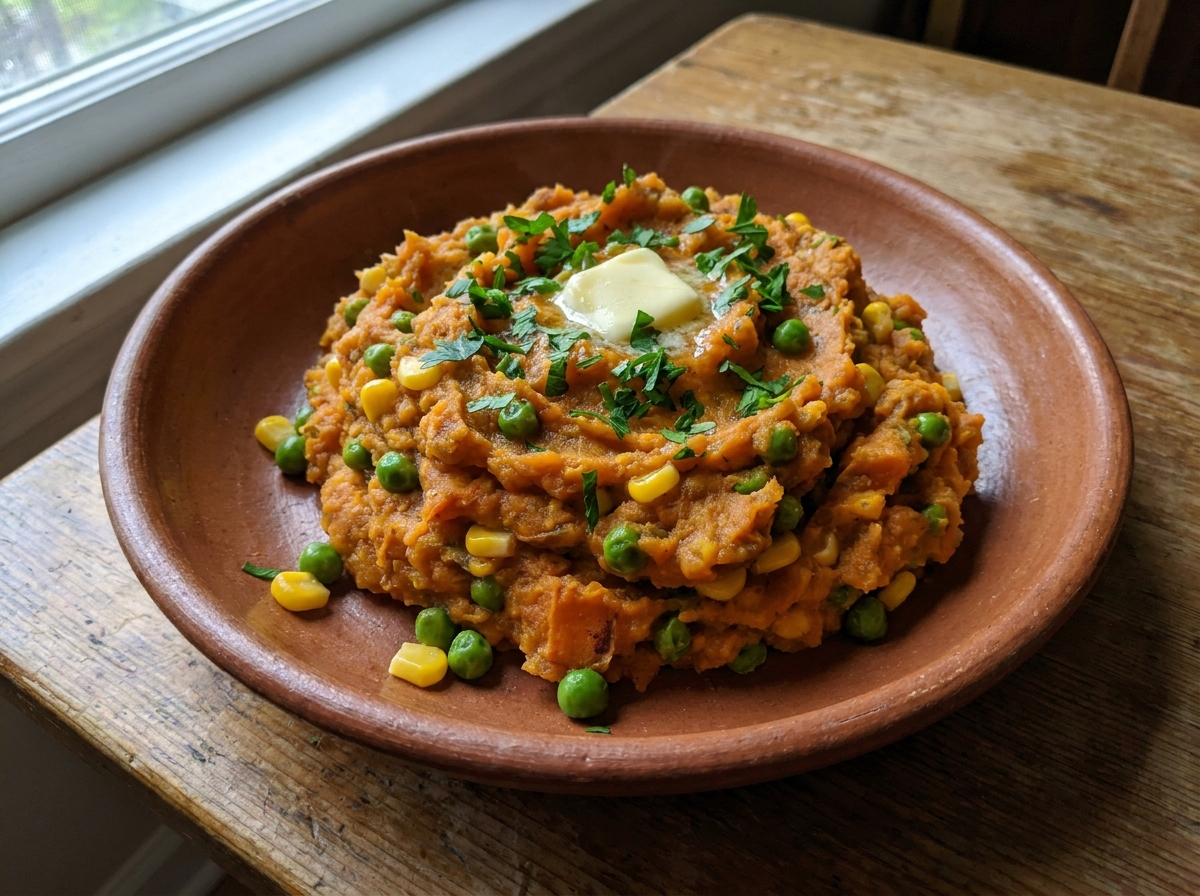
Irio is a Kikuyu mash from central Kenya, and the word simply means food. This version uses roasted sweet potatoes, folded through soft onion and garlic with green peas and sweet corn, so it is silky, gently sweet and full of color.
On the Thanksgiving table: it takes the place of mashed potatoes, and it holds up well under gravy.
Irio (Kenyan Sweet Potato Mash with Peas and Corn)
This irio recipe makes the comforting mash of potatoes, green peas and corn that the Kikuyu people of central Kenya have cooked for generations on the slopes of Mount Kenya. The word irio simply means food in Kikuyu, and today it names this hearty, colourful mash that is served all over Kenya and in East African homes abroad.Classic irio uses white potatoes. This version uses roasted sweet potatoes for a naturally sweet, silky mash, folded through soft onion, garlic and a little paprika so the peas and corn really shine. It is mild, buttery and filling enough to eat on its own.You may also hear it called mukimo, especially when greens are mashed in, or simply Kenyan mashed potatoes. In Kenya it is famously paired with grilled meat as nyama na irio. Browse more Kenyan recipes for the rest of the meal.
Check out this recipe
2. Mealie Bread (South Africa)
Mealie is the South African word for corn. Traditional mealie bread is steamed in a covered tin, which gives it a moist, pudding-like crumb studded with whole sweetcorn kernels. It can also be baked for a golden crust, and the recipe covers both methods.
On the Thanksgiving table: it stands in for cornbread, and it is good the next morning with butter and jam.
Mealie Bread (South African Steamed Corn Bread)
This mealie bread recipe makes the classic South African corn bread: a soft, moist, gently sweet loaf packed with fresh sweetcorn. Mealie is the South African word for maize or corn, and mealie bread (mieliebrood in Afrikaans) has been a farmhouse favourite for generations, especially in summer when fresh mealies are everywhere.Unlike crumbly American cornbread, traditional mealie bread is steamed in a covered tin set in a pot of simmering water, which gives it a tender, pudding-like crumb. Many cooks now bake it instead for a golden crust, and both methods are included here. It tastes sweet and buttery with juicy bursts of corn and a hint of smoked paprika. Mealie bread is a must at a braai, next to boerewors, chops and chakalaka, and it is just as good for breakfast with butter and apricot jam.Find more South African recipes on African Vibes.
Check out this recipe
3. Sukuma Wiki (Kenya)
Sukuma wiki is Swahili for push the week, a name that comes from how these inexpensive greens stretch a household budget. Collard greens are cut into fine ribbons and sauteed with onion, garlic and tomato until tender but still bright green.
On the Thanksgiving table: it covers the greens, and it is ready in about 25 minutes, far faster than slow-braised collards.
Sukuma Wiki (Kenyan Sauteed Collard Greens)
This sukuma wiki recipe is the way Kenyan home cooks make their everyday greens: collard greens cut into fine ribbons and sauteed quickly with onion, garlic, ripe tomato and a touch of chilli until tender but still bright green.Sukuma wiki is Swahili for push the week, because these cheap, filling greens stretch the household budget until payday. You will find it on tables across Kenya and Tanzania, usually next to a mound of ugali, and it is just as common at lunch as at dinner. The flavour is fresh, savoury and lightly tangy from the tomatoes, with a gentle kick if you add chilli. It is also known as Kenyan collard greens, East African kale or simply sukuma, and many families stir in a little minced beef to make it a meal.Learn more about the dish and its story in our guide to sukuma wiki, or explore more Kenyan recipes.
Check out this recipe
4. Kelewele (Ghana)
Ghana’s favorite street snack: ripe plantain tossed in a paste of fresh ginger, onion and hot pepper with cloves, anise and nutmeg, then fried until the edges caramelize. Sweet first, then warm from the ginger and chilli.
On the Thanksgiving table: it does the job of candied yams or sweet potato casserole, with enough heat to cut through a rich plate.
Kelewele (Ghanaian Spicy Fried Plantains)
This kelewele recipe makes Ghana’s most famous street snack at home: ripe plantain cut into chunks, tossed in a fresh paste of ginger, onion and hot pepper with cloves, anise and nutmeg, then fried until the edges turn dark, sticky and caramelised.Kelewele (say keh-leh-WEH-leh) is the night-time treat of Accra and towns across Ghana, sold hot from roadside fryers and wrapped in paper with a handful of roasted peanuts. The flavour is sweet first, then the ginger and chilli warm you up, with the spices adding a gentle, almost festive perfume. It is also called spicy fried plantains, Ghanaian spiced plantain or kele, and it is a close cousin of aloco from Cote d’Ivoire.Serve it as a snack, a side dish or even dessert. Naturally vegan and gluten-free, it is also one of the easiest dishes in our collection of Ghanaian recipes.
Check out this recipe
5. Chakalaka (South Africa)
Chakalaka is the spicy vegetable relish that goes with every South African braai. Carrot, peppers, cabbage and tomato are cooked down with curry powder and smoked paprika, then finished with baked beans.
On the Thanksgiving table: it plays the role of cranberry sauce, the sharp, saucy thing that wakes up turkey and stuffing, and it tastes even better the day after it is made.
Chakalaka (South African Vegetable Relish)
This chakalaka recipe makes the spicy, colourful vegetable relish that no South African braai is complete without. Onion, garlic and ginger are fried with curry powder and smoked paprika, then carrot, peppers, cabbage, tomato and chili are cooked down and finished with a can of baked beans for a chunky, saucy, sweet-hot side.Chakalaka is said to have been born in the townships around Johannesburg, where mineworkers cooked canned vegetables and beans with chili and curry to go with their pap. Indian South African spice traditions shaped the curry flavour, and today every family has its own version, from mild to fiery. It is tangy, smoky and spicy, and it tastes even better the day after it is made.Chakalaka is also sold canned and is sometimes called South African vegetable relish or chakalaka and beans. For more dishes from the country, browse our South African recipes.
Check out this recipe
6. Vegan Jollof Rice (Nigeria)
Jollof is the celebration rice of West Africa, cooked in a fried pepper and tomato sauce until every grain turns red. This version follows the Nigerian party style with vegetable stock, so it works for everyone at the table. See how other countries make it in our guide to jollof rice variants.
On the Thanksgiving table: it is the festive grain dish, and a natural bed for sliced turkey.
Vegan Jollof Rice (Plant-Based West African Jollof)
This vegan jollof rice recipe gives you everything West Africa loves about jollof: long-grain rice cooked slowly in a fried pepper and tomato sauce until every grain is red, smoky and full of flavour, with no meat, fish or chicken stock in sight.Jollof is the celebration rice of Nigeria, Ghana, Senegal and beyond, and this version follows the Nigerian party style. It is seasoned with curry powder, thyme, bay leaves and a little ginger, then left to form a light bottom-pot crust for that signature smoky taste. Vegetable stock does the work chicken stock usually does, so the rice tastes rich and complete. You may also see it called vegetarian jollof, plant-based jollof or dairy-free party rice.Serve it as a festive side or a satisfying main with fried plantain and a fresh salad. See how each country makes it in our guide to 6 jollof rice variants, or browse more Nigerian recipes.
Check out this recipe
7. East African Pilau (Kenya)
Pilau reached the Swahili coast through centuries of Indian Ocean trade, and in Kenya it is a must at weddings, Eid and Christmas. Onions are fried until dark, whole spices are toasted in the oil, then beef and rice cook together in one pot. It is aromatic rather than hot.
On the Thanksgiving table: it fills the stuffing slot as a hearty, spiced rice, with beef already in the pot.
East African Pilau (Kenyan Pilau Rice)
This pilau recipe makes the fragrant, deep brown spiced rice that is the centrepiece of celebrations in Kenya and Tanzania. Onions are fried slowly until dark golden, whole spices and pilau masala are toasted in the oil, then tender beef, rice and rich stock cook together in one pot until every grain is fluffy and full of flavour.Pilau (also written pilaf or pilaw) arrived on the Swahili coast through centuries of Indian Ocean trade with Arabia and India, and it is now loved across East Africa. In Kenya it is a must at weddings, Eid and Christmas. It tastes warm and aromatic rather than hot, with cumin, cardamom, cinnamon and cloves in every bite.Serve it with fresh kachumbari for the classic coastal pairing, or browse more Kenyan recipes.
Check out this recipe
8. Oven-Baked Moi Moi (Nigeria)
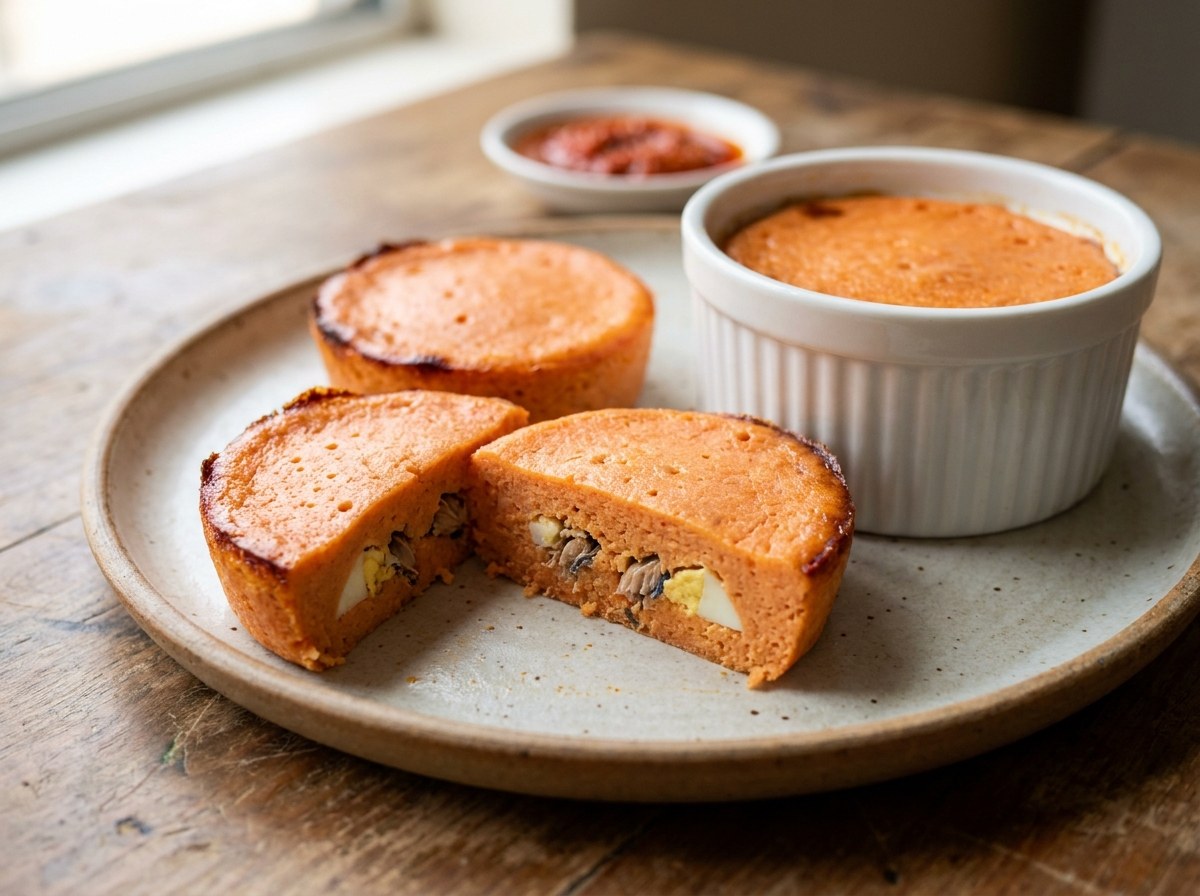
Moi moi is a Nigerian pudding of blended black-eyed peas, red peppers, onion and palm oil. This version bakes in ramekins or a loaf tin set in a water bath, with no leaves or steamer needed, which makes it easy to scale up for a crowd.
On the Thanksgiving table: it is the make-ahead casserole, and individual ramekins look good on a buffet.
Oven-Baked Moi Moi
This oven baked moi moi recipe gives you soft, moist Nigerian bean pudding without leaves, foil wraps or a big steaming pot. The batter of peeled black-eyed peas, red peppers, onion, crayfish and palm oil is poured into ramekins or a loaf tin and baked in a water bath, so it cooks in gentle steam and sets evenly.It is the easiest way to make a large batch for parties, and the individual portions look lovely on a plate. The flavour is the same rich, savoury moi moi (moin moin) loved across Nigeria, studded with egg and fish if you like.Compare it with our leaf-wrapped traditional moi moi, see every style in our moi moi variations guide, or explore more Nigerian recipes.
Check out this recipe
9. Koki Beans (Cameroon)
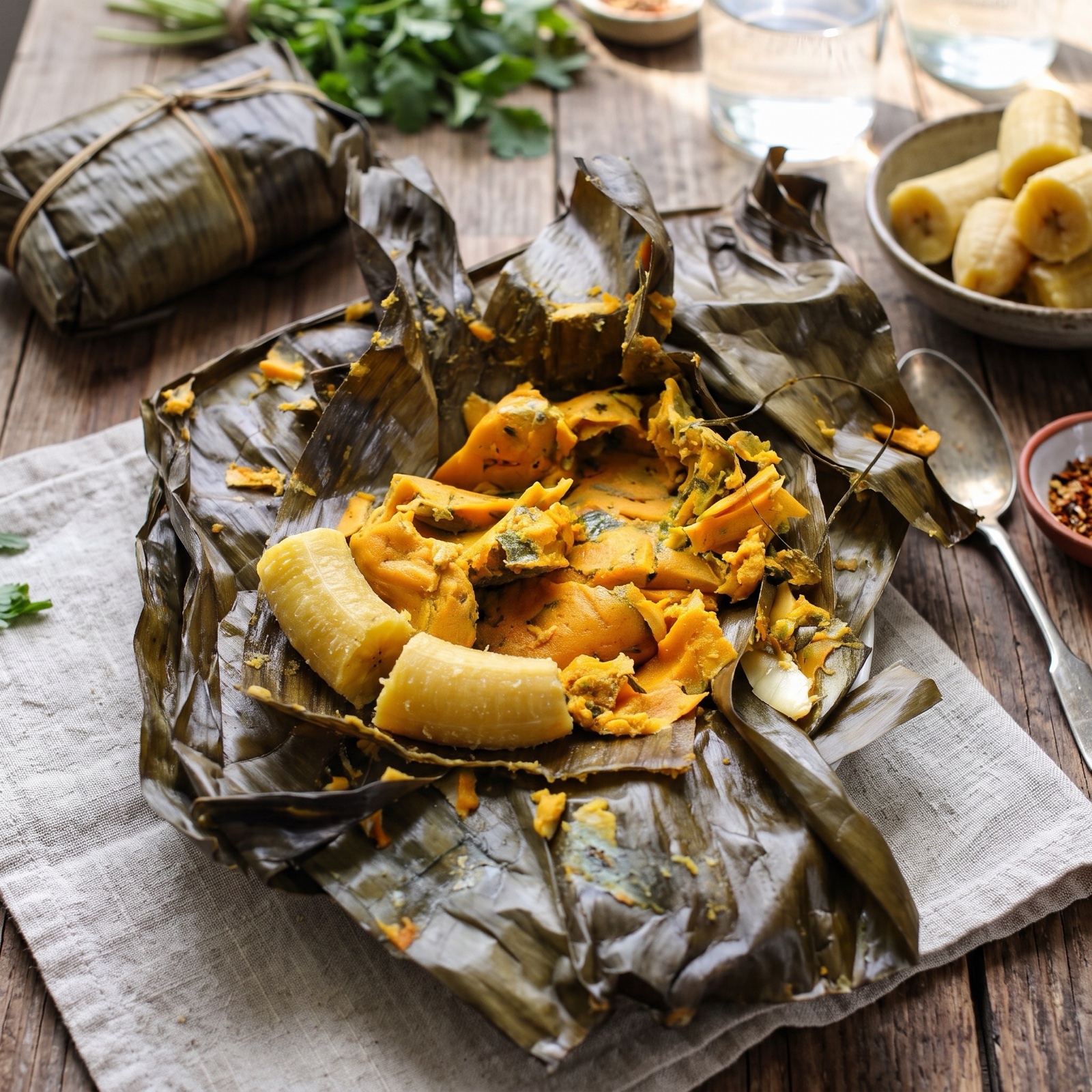
Koki is moi moi’s Cameroonian cousin: peeled black-eyed peas blended smooth, beaten with warm red palm oil, pepper and chopped greens, then steamed in banana leaves until firm and deep orange.
On the Thanksgiving table: it brings a plant-based dish with real presence. Unwrap the banana leaf parcels at the table.
Koki Beans (Cameroonian Steamed Black-Eyed Pea Pudding)
This koki beans recipe makes one of Cameroon’s best-loved dishes: peeled black-eyed peas blended into a smooth paste, beaten with warm red palm oil, pepper and chopped greens, then wrapped in banana leaves and steamed until firm, sliceable and deep orange.Koki, also spelled khoki, is cooked all over Cameroon, from the Littoral and West regions to the North West, where cocoyam leaves are folded into the batter. Bamileke cooks often make it plain, with just beans, palm oil, pepper and salt. The result tastes earthy, rich and gently smoky from the palm oil, with a soft, custard-like centre and a subtle aroma from the leaves. It is also known as Cameroonian bean cake or steamed bean pudding, and it is a close relative of Nigerian moi moi.Koki is naturally vegan and gluten-free. Serve it with boiled ripe plantains, and find more classics in our Cameroonian recipes.
Check out this recipe
Where to buy: to wrap koki the traditional way, look for banana leaves for steaming, sold frozen in African, Asian and Latin American grocers.
10. Cameroonian Puff Puff (Cameroon)
In Cameroon these fried dough balls are beignets in French and puff puff in English, and they are the first B in BHB, the beignets, haricots and bouillie breakfast. The batter is just flour, sugar, salt, water and yeast, given a long rise so the puffs come out light inside with a thin, crisp shell. Find more classics in our Cameroonian recipes.
On the Thanksgiving table: they are the thing to pass around while the turkey rests. Serve some plain and some rolled in sugar.
Cameroonian Puff Puff (Beignets)
This Cameroonian puff puff recipe makes the soft, golden beignets that are fried fresh at roadside stands across Cameroon every morning. The batter is as simple as it gets: flour, sugar, salt, warm water and active dry yeast, with no milk, egg or butter. A long, slow rise of two to three hours is what gives them a light, airy inside and a thin, crisp shell.French-speaking Cameroonians call them beignets and English-speaking Cameroonians call them puff puff. Either way, they are the first B in BHB: beignets, haricots and bouillie, the breakfast of puff puff, stewed beans and corn porridge that many Cameroonians grew up on. They are just as at home at weddings, birthdays and parties, piled high on a tray.Eat them plain, roll them in sugar, or do it the Cameroonian way and tear them open next to a bowl of beans and a spoon of pepper sauce. Find more classics in our Cameroonian recipes.
Check out this recipe
Two African Thanksgiving Menus
Mixing too many spice profiles can crowd a plate. These two pairings keep each table coherent.
A West African Table
- Vegan jollof rice as the main grain
- Kelewele in place of candied yams
- Oven-baked moi moi or koki beans as the make-ahead dish
- Cameroonian puff puff to pass around before dinner
An East and Southern African Table
- East African pilau as the main grain
- Irio in place of mashed potatoes
- Sukuma wiki for the greens
- Mealie bread and chakalaka in place of cornbread and cranberry sauce
A Make-Ahead Plan
- The day before: make the chakalaka and the mealie bread, and bake the moi moi or steam the koki. All of them reheat well.
- The morning of: cook the jollof or pilau and keep it covered. Reheat in a low oven with a splash of stock.
- Just before serving: make the irio and sukuma wiki, then fry the kelewele and puff puff last so they stay crisp. The puff puff batter can be made the night before.
Plan the Rest of Your African Thanksgiving Table
Frequently Asked Questions
Can I make these African side dishes ahead of time?
Yes. Chakalaka, mealie bread, moi moi and koki beans can all be made a day ahead. Jollof and pilau reheat well, covered, in a low oven. Fry kelewele and puff puff just before serving so they stay crisp.
Where can I find plantains and red palm oil?
African, Caribbean and Latin American grocers usually stock both, and many large supermarkets now carry plantains. Banana leaves are sold frozen in African and Asian grocers.
Which of these side dishes are vegan?
Vegan jollof rice, kelewele and Cameroonian puff puff are vegan as written. Koki beans, chakalaka and sukuma wiki are vegan with vegetable bouillon and without the optional beef in the sukuma wiki. Irio and mealie bread are vegetarian. Moi moi and pilau contain fish or meat.

 Black News