
Rwanda And Oman Are Building a Trade Bridge
Rwanda and Oman are deepening economic ties, with logistics, dry ports and investment at the centre of a growing partnership between East Africa and the Gulf. The two countries signed two agreements and six memoranda of understanding on Tuesday, 8 September, as Rwandan President Paul Kagame concluded a two-day official visit to Oman. The […] The post Rwanda And Oman Are Building a Trade Bridge appeared first on Time Africa.
 Black News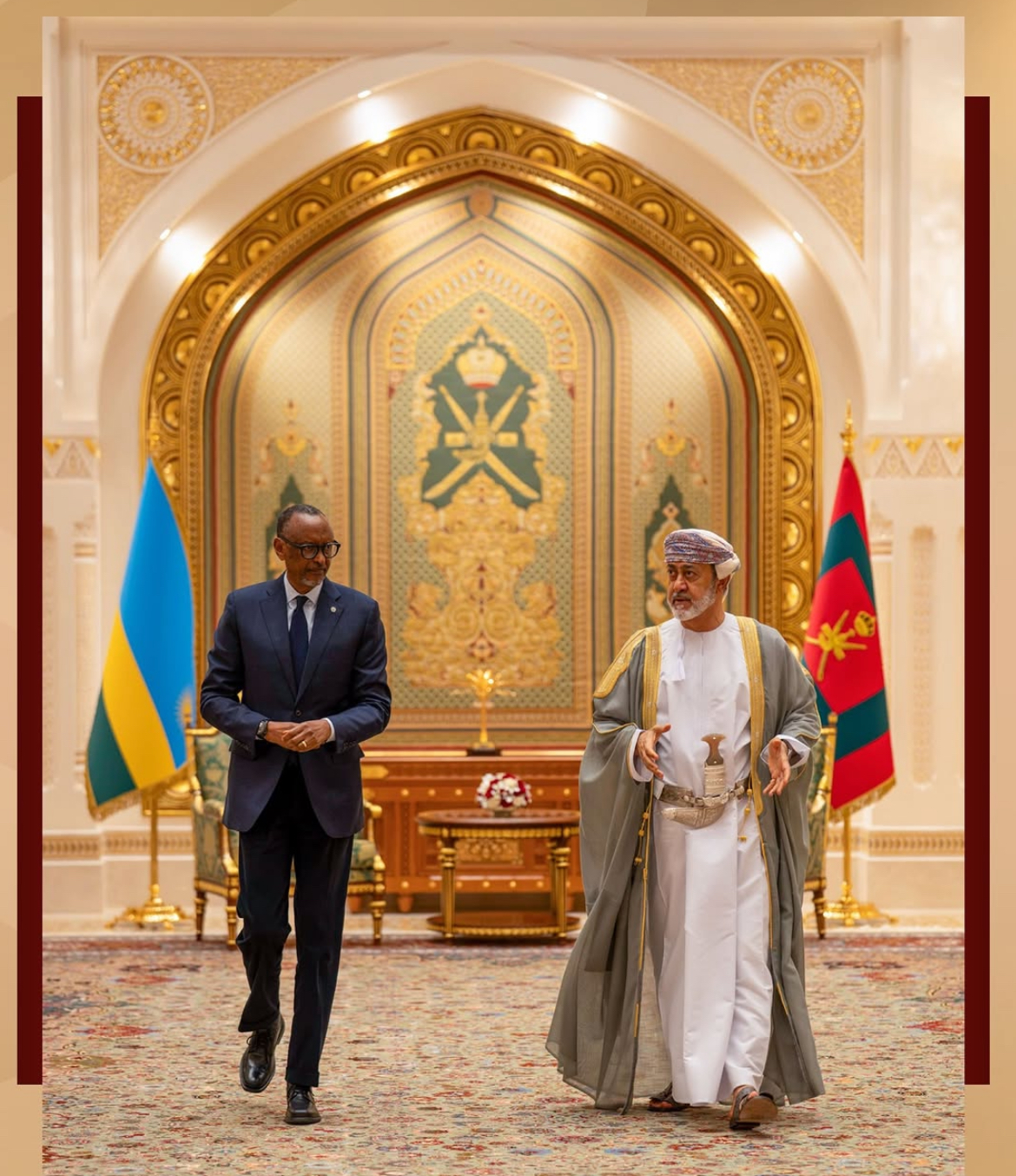
Rwanda and Oman are deepening economic ties, with logistics, dry ports and
investment at the centre of a growing partnership between East Africa and the Gulf.
The two countries signed two agreements and six memoranda of understanding on Tuesday, 8
September, as Rwandan President Paul Kagame concluded a two-day official visit to Oman.
The agreements cover mutual visa exemptions for official passport holders and the avoidance
of double taxation. The accompanying memoranda cover political consultations, labour,
agriculture, investment promotion, logistics and the development of inland and dry ports, as
well as strategic partnership and investment activation.
While the agreements span several sectors, logistics stands out as an area with potential
significance for Rwanda, a landlocked country that relies on regional transport corridors to
access international markets.
Rwanda already has experience using inland logistics infrastructure to connect its economy to
seaports. The Kigali Logistics Platform, operated by DP World, serves as an inland logistics
hub connecting Rwanda to regional trade routes linked to the ports of Mombasa in Kenya and
Dar es Salaam in Tanzania.
Oman brings a different but complementary experience. Its location on major maritime routes
and its investment in ports, free zones and inland logistics infrastructure have positioned the
country as a logistics hub between markets in the Gulf, Asia and Africa.
The two countries are now seeking to exchange expertise and deepen cooperation in this area.
Their latest agreements build on a logistics cooperation programme signed earlier in 2026
covering logistics services, the development and operation of dry ports and related supply-
chain services.
The timing also comes as physical connectivity between the two countries improves. In July,
Oman’s SalamAir launched a twice-weekly direct service between Muscat and Kigali,
creating a new air link between Oman and East Africa.
For Rwanda, stronger links with Oman could provide additional avenues for investment and
access to Gulf markets, while Oman gains a closer connection to Rwanda and the wider East
African market.
The partnership also extends beyond logistics. During Kagame’s visit, the two sides
discussed cooperation in areas including investment, transport, energy, mining, tourism,
communications, banking and finance. They also agreed to establish resident embassies in
Kigali and Muscat, alongside a Joint Committee and Joint Business Council, creating new
channels for sustained government and private-sector cooperation.
The significance of the agreements therefore lies less in the number of documents signed than
in what comes next.
For Rwanda, the challenge is turning cooperation on paper into lower trade costs, stronger
supply chains and greater access to international markets. For Oman, the opportunity is to
deepen its role as a gateway between the Gulf and African economies.
The partnership reflects a wider shift in how African countries are approaching trade: not
only seeking markets, but investing in the infrastructure, connectivity and relationships
needed to move goods, capital and people across borders.
The post Rwanda And Oman Are Building a Trade Bridge appeared first on Time Africa.