Johanna Fernández, Young Lords historian and prison abolitionist, makes her transition
Dr. Johanna Fernández, the Dominican American historian, prison abolitionist, and movement scholar, died on July 30 The post Johanna Fernández, Young Lords historian and prison abolitionist, makes her transition appeared first on New York Amsterdam News.
 Black News


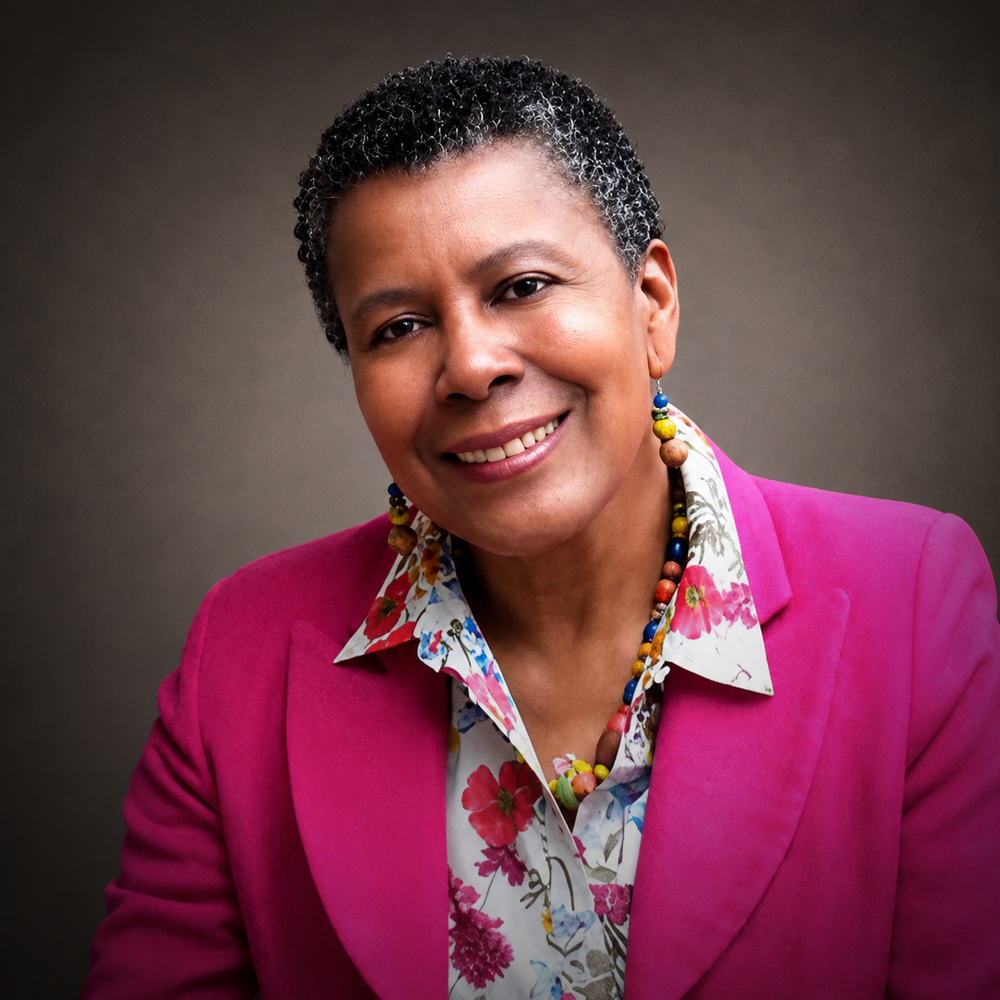
Dr. Johanna Fernández, the Dominican American historian, prison abolitionist, and movement scholar, died on July 30, 2026, after a years-long struggle with non-small cell lung cancer. She was 55.
Fernández’s life –– a mix of scholarship, activism, family, and friendship — was rooted, her brother Geovanny Fernández explained, in lessons learned from their parents, especially their father, Tirso Fernández.
Tirso Fernández was from the Dominican Republic, from a small place near the city of San Juan de la Maguana called Lavapiés. He and his wife, Minerva Fernández, who is from La Vega, were refugees of the 1965 Dominican Civil War. They raised Johanna and her brothers, Geovanny, Osvaldo, and Tirso Fernández Jr., in New York City, with a politics that Geovanny described as based on generosity. “I think the idea was to help people, particularly those who didn’t have a voice,” he said. Their father, he remembered, measured family visits back home partly by whether his children had helped others: “Did I give any money? How much money did I give?
“As for politics, my cousin said that the purpose of politics is to help others. Certainly, that was an ethos (helping others) of my sister, [that] she learned from her father, Tirso Fernandez.”
A professor of history at Baruch College and the CUNY Graduate Center, Johanna Fernández was a leading scholar of the Young Lords, the Puerto Rican and Latinx radical organization whose New York chapter fought for health care, sanitation, breakfast programs, lead-poisoning testing, and community control. Her award-winning book, “The Young Lords: A Radical History,” was based on oral histories, archives, and recovered police surveillance files obtained through a Freedom of Information Law lawsuit she filed against the New York Police Department. Her suit helped uncover the Handschu files, more than one million NYPD surveillance files compiled between 1954 and 1972 on anti-Vietnam War demonstrations, civil rights rallies, early LGBTQ+ rights protests, the Black Panthers, the Young Lords, and the Nation of Islam. The NYPD had for decades claimed the files were lost.
Former Young Lord and veteran journalist Juan González told the AmNews Fernández’s book stands apart because of the scope and seriousness of her research. “There’s been about a dozen books on the Young Lords that have been published,” González said: “There’s even one in French by a French journalist, published in France several years ago. And there have been numerous memoirs and academic studies, and Johanna’s book is by far the best, the most complete and the most analytical, and one that best places the role and contributions of the Young Lords in the historical context of social change in the United States and of revolutionary movements. She really was, I guess, the only person who really distilled and summarized what was unique about the Lords compared to other organizations, other revolutionary social change organizations of that era.
“She really was not only the best analyst,” González added, “and I say this even though I had some disagreements with some of the stuff in her book. I didn’t agree with all of it, but I totally respect the devotion and the time she took to try to place the Lords in the proper historical context of that era. And she was very dogged in her research, digging up many documents that other people had not.”
“I think there are going to be some memorials happening,” Mickey Melendez, co-founder and former head of security for the New York Young Lords, said. “We don’t know the dates yet, and we don’t know if there’s going to be a viewing or not. The family’s going to follow up … But basically, as her brother said, you know, she was so busy living life that she left no instructions.”
The interviews and exchanges Johanna had with Young Lords’ founders while writing her book helped her build relationships with them. For the rest of her life, Fernández stayed close to Young Lords veterans, pushed to protect their archives, and insisted on bridging their work with the efforts of today’s organizers. The exhibition, ¡Presente! The Young Lords in New York, which she co-curated with Dr. Yasmín Ramírez, was on view at the Bronx Museum of the Arts, El Museo del Barrio, and Loisaida Inc. between July and December 2015. In later work, she created the Latinx Freedom Movement Archive and Exhibition Project, with historian Felipe Hinojosa, and it is currently on view at The Shed in Hudson Yards.
Filmmaker and producer Cionin Lorenzo said Fernández’s archives “need to really be protected,” calling the work “brave” and “brilliant.” She recalled watching visitors encounter the Latinx Freedom exhibition at The Shed and realizing the reach of Fernández’s labor. “It made me very emotional to see it,” Lorenzo said, “and I knew what it was about. I knew the background. We’ve talked about all these things so many times. But just seeing it there, at The Shed, where there are so many tourists, I was waiting for someone, so I had an hour to kill, and I really just wanted to sit there and watch people see the exhibition. And I was really blown away. People from all over the world, all different cultures, ages, languages, you know, whether they stopped for five minutes or stayed half an hour. You would hear their conversations, and they were smart. People would talk to each other. They would see something and be kind of blown away.
“Like, that’s the effect her work has. It doesn’t matter where you’re from; it’s a universal struggle, telling the story of people who love and want everyone to be equal, to be safe, and to live their freedom and their truth. And that resonates with people. I saw it in that one hour that I was standing by the Latinx Freedom.”
Fernández’s commitment to prison abolition led her to edit Writing on the Wall: Selected Prison Writings of Mumia Abu-Jamal, co-edit a special issue of Socialism and Democracy with Abu-Jamal on the roots of mass incarceration, and write and produce “Justice on Trial: the Case of Mumia Abu-Jamal.”
Mickey Melendez says there will be upcoming events to celebrate Dr. Fernández and the legacy of her work, along with remembrances of three original Young Lords female founders who all passed away this year: Denise Oliver-Vélez, Minerva Solla, and Connie Cruz.
Even while ill, Fernández kept working. González said that he last saw her in April at the Latinx Freedom Conference at the CUNY Graduate Center. “She insisted on participating in everything and continued to coordinate the conference even as she was battling her cancer,” he said. The project brought movement veterans, scholars, artists, and community leaders together to preserve oral histories and archives of Latinx freedom struggles across the country.
At the time of her death, Fernández was also working with Melendez and Lorenzo on a scripted miniseries about the Young Lords, intended to bring the organization’s story to broader audiences. Lorenzo said Fernández would have been essential as a consultant because of the historical knowledge she brought and because “she had such deep relationships with so many of the members and they trust each other so much.” Melendez said the goal was to create an exciting series that showed the momentum and urgency of the Young Lords’ organizing. “The intent of the series was to make it exciting, to end each episode with a cliffhanger so you come back, and things of that nature,” Melendez said. “So I’m going to continue that work as best as I possibly can to see this finished.”
Geovanny Fernández attests that his sister was a professor, organizer, activist, friend, daughter, and sibling—someone who “was too busy living to have left us instructions on what to do” now that she has passed. She carried forward her parents’ political ethic of generosity and expanded it into archives, classrooms, exhibitions, prison justice work, and intergenerational organizing. “She did a lot in 55 years,” he said.
Fernández’s family said in a statement: “Our family is taking time to grieve and make arrangements. Funeral and memorial service information will be shared as soon as it is available. Thank you for your prayers, love, and support during this incredibly difficult time. With love, The Fernandez Family https://www.johannafernandez.info/about.”
The post Johanna Fernández, Young Lords historian and prison abolitionist, makes her transition appeared first on New York Amsterdam News.