Interview with Leroy Brown
The post Interview with Leroy Brown appeared first on Reggae Vibes.
 Black News

Interview with Leroy Brown
Where: Unknown
When: 2007
Reporter: Peter I
Photos: Nicolas Maslowski (Leroy Brown), Sven Reliszko (Leroy Brown live), Beth Lesser (Robbie Shakespeare, Leroy Brown, Willi Williams), Teacher (Alton Ellis), Courtesy of the respective record companies (pics/labels/sleeves)
Copyright: 2026 – Peter I
LEROY BROWN: MR. EMOTION!
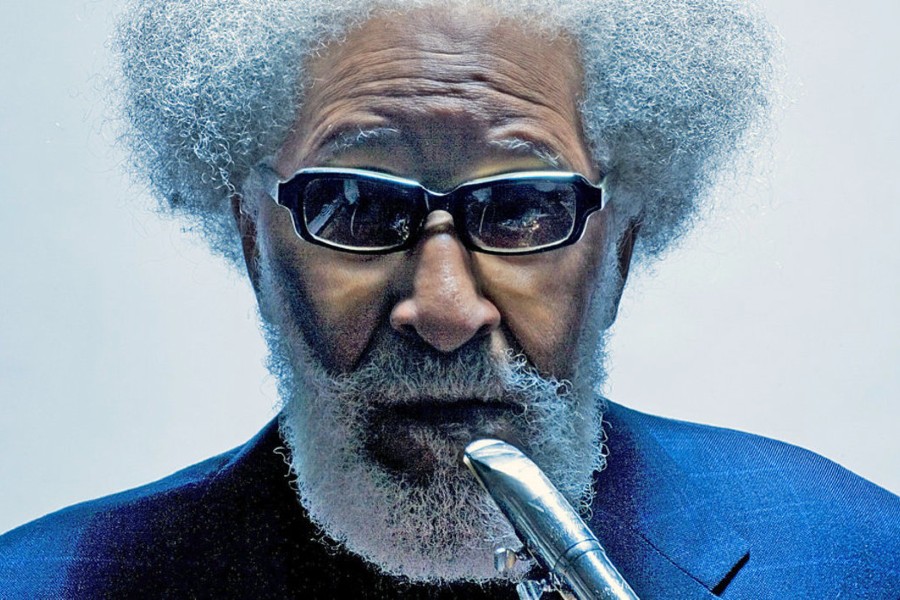
Some singers are too good to be hidden in the obscurity they, quite often, find themselves in. And in reggae, it turns out that many of them has had a finger in more things than what is documented or what anyone could guess. Like Leroy Brown, the man known as ‘Artist’, not only for the songwriting abilities, but for his talent in drawing. Leroy drew many posters for Jamaican events since the 1960’s (how about that for a book?). Leroy Brown was, along with the Barrett brothers, the founder of the Hippy Boys, later to become the Upsetters. He was also a member of the vocal group the Emotions. But for reggae aficionados he is mainly known for that special Album of Albums, ‘Color Barrier’, originally released as ‘Prayer of Peace’ in 1976, and probably one of the five best records produced during the roots era, which recently got a French reissue after many years of being unavailable. A Canadian resident for more than the past thirty years, he devoted a lot of his own labour in the 1970’s to create what is now a pretty strong reggae scene in Canada. As you could expect the man had a long story and much of it is detailed here. My thanks to Leroy and family, Makasound crew, Carlton Hines, Donovan Phillips, Tim P. and Steve Barrow.
To begin here, how did you grow up, Leroy?
How did I grow up? OK, that’s a very good one.
(Laughs) OK!
I like that, ‘grow up’ (laughs)! OK, I grew up in Jones Town basically, from Jones Town to Trench Town.
More or less the same part of Kingston, right?
Yes, I grew up in the western part of Kingston. Then, I grew up in a Christian home, a musical home. My mom was at church, she was just about everything at that church. She was in charge of music, everything, teachin’ the young kids how to sing, etc, etc. So basically I start – my mom was really a good singer too, and her sisters and brothers, they sang a lot during those times. Yes, schoolling, Denham Town School, same West Kingston again, and by now it’s the story of Alton Ellis and me during my school years. I met Alton at an early age, Alton Ellis.
How did that come about?
I was singin’, like you know kids on the corner singin’, Alton passed by an’ I noted that he liked my sound, he said he could give me some help. Trust me, it was like the biggest thing wha’ happen in life to hear the great Alton Ellis thought… that HE was pickin’ me! From there he was givin’ me – I was singin’ before that, but it didn’t encourage me more, before hearing that from Alton, y’know, that I sound good. And from there I started taking lessons from Alton an’ go by his place an’ listen to him rehearse. That’s where I met Skully (Simms).
Where was Alton rehearsing, he was based in Trench Town, wasn’t he?
Yeah, he was in Trench Town in those days.
In his backyard, close to Higgs.
Right. I used to go up there. But the other person who played an active role in my life too, is Roy Wilson.
Higgs & Wilson?
And Joe Higgs, right, from Higgs & Wilson. Yeah, he was another one who… As a kid, people used to like my sound as a little boy, and everybody always want to tell me that they can help me and that they can do everything, whatever, for me. So, somebody did tell me to listen to Roy, he too used to be a part of the school singin’ and church singin’. But one other thing is, which stand out the most, is that – that encourage me the most, is when you’re in Trench Town singin’ and people really like you – ca’ they boo you for everyt’ing there, man…
(Chuckles)
If people like you there, man, it give you confidence that you can really do it. By then, moving on to the East Kingston where it REALLY happened, it really ‘appen when I moved to the eastern side of Kingston, was in Rollington Town, them town area. I met Family Man (Barrett) and his brother (Carlton), Maxie Romeo.
So that’s where the Hippy Boys started.
Oh, yes. But this story of the Hippy Boys, you are just about to hear the real story now…
Ah, shoot!
I hear every bit of pieces, pieces all over the place, but people are running away from the real thing. Hippy Boys started out as a group named the Soul Mates, it was written wrong on the Makasound album (‘Color Barrier’ liners), the Soul Mates, that was the name of the group. We used to rehearse at the Baby Grand in Cross Roads, Kingston. We didn’t have a lot of stuff, didn’t have a lot of equipment. The bass that Family Man used to play was borrowed from the Gaylads, the drum was borrowed from the Gaylads that Carlie used to play. Carlie wasn’t even the original drummer, it was a guy named Shan that was playing with the Gaylads. Then, we had times when Shan don’t show up, we got Carlie to play, ’cause Carlie was really a better drummer an’ Shan didn’t want to play an instrument. So we were basically rehearsing on a lot of borrowed instruments. We moved on from the Baby Grand Club to another part of Kingston, a little further east out where (Lloyd) Shakespeare and Maxie had a base, called the Green Basket.

We used to rehearse at the Baby Grand Club before, used to play there every weekend, y’know, we rehearsed an’ in turn we never have to pay for rehearsal, we just play at the club for the gate, that kind of thing. So when we move over now to the Green Basket an’ out in the yard at Langston Road corner, you used to have people from another hotel named the Flamingo Hotel, they was going by and heard us practicing one night, and they came in. They wanted to find out if we guys want to do a show. That was about the biggest thing that could happen to us, we were still the Soul Mates then. And we agreed, and they say they wanna change the name of the group, that’s when they changed the name to the Hippy Boys. I wasn’t too pleased about it ca’ I didn’t like the name.
Where did the name come from? OK, we know about the ‘hippie’ era in Europe and the States, etc, it was in full swing at that time, but it was that or a different connection?
These people had European connections, the Flamingo Hotel. So I think, because of the way how we guys did look, or something, why they figure they’d call us the Hippy Boys.
You had that style, dressing a certain way, and so on?
Maybe, y’know. (Chuckles) So, anyway, the name Hippy Boys stuck to us from that point. I was in the Hippy Boys and the Emotions at the same time. Maxie was the one who invite me into the Emotions. Then Kenneth, that was the original member, Lloydie (Shakespeare, brother to Robbie) and Maxie, for some reason Lloydie and Kenneth had some kind of dispute, whatever it was, he was no longer in the group. That was how I was featured in the group now. And so I was in the Hippy Boys band and recording with the Emotions. It wasn’t long after Maxie went solo, and I took over the group. So he left me and Lloyd Shakespeare now.
Why did he leave the group, what was the reason?
He went solo, we never had no argument or nutten. No, we never argued.
It was just time for him to break away and do his own thing.
What he wanted was to go… He went and did some songs on his own, and something start to happen to him, like ‘Wet Dream’ and all those songs. It was natural he’d go solo.
Right.
So at that stage – he used to have a little joke about it, that he was ‘coming back for his group’ and all of that (laughs)! For we are friends… And I featured a brother named Matthews, we called him ‘Soul Man’. He was in the group for a little while. We recorded some songs for Phil Pratt and Patrick Harty, and then we moved on.
Patrick Harty, that was the guy who owned the Kismet label?
Yes! Same guy. He was early, y’know, he was one of the early producers.
What was the link to him?
All right, now. There’s a link between Patrick Harty, Milton Henry, myself. We did have a group named The Progressions, and we were all friends. Milton Henry at that time was a guy who used to assist the Techniques, so everybody was in the Alman Town area as all young boys, we know one another. So, he produced those two songs, a couple songs for us. And then, the guy Soul Man went his way, I think his name was Brenton Matthews. He went his way, and they ask Milton to come and do some work with us – Milton Henry. That’s how we did the first recording, and the first we did with Milton was ‘The Storm’ and then ‘You Can’t Stop Me’, and for Sonia Pottinger. So playin’ around in the studio the night we came up with the idea for ‘Dr No Go’, the song, the version of ‘You Can’t Stop Me’. So what happened from there now is that I did pick a few musicians to be on that session, which was part of the Hippy Boys, Family Man, Glen Adams, a few others. And the real truth about it, it wasn’t the complete Hippy Boys, but it was the majority of the Hippy Boys who backed us. And from there on the Hippy Boys story – we’re still in the Hippy Boys – Maxie was on his own by then, eventually I was no longer in the Hippy Boys, I concentrated more on the Emotions. Then when Robbie’s brother took off for a while, I featured Audley Rollens. Audley Rollens used to be always with us, rehearsing with us and so on, he was just a next friend in line, he was an excellent singer so we featured him. We went from there now to Matador (Lloyd Daley), did a couple recordings for Mrs Pottinger, and then on to Lloydie Matador, where we recorded ‘War War’ and a series of songs that Matador got. ‘War War’, ‘Hallelujah’, ‘Poor Man Story (Long)’, and so on.
What about this guy, Web Stewart, where and when does he fit into the picture?
Web Stewart? Yes, Web Stewart is the man…
‘Webbie’.
‘Webbie’, who formed the band. He was the lead singer, the lead guitarist, and the leader for the band, Hippy Boys. He started the Soul Mates. He even go a little further than that, he was in the group with Bibby & The Astronauts. Bibby is the same person from the Gaylads (BB Seaton). Webbie was one of the guys, he was a cabinet maker, and he could make guitars, he had quite a bit of knowledge, plus he was older than us. He’s the one who start calling me ‘Artist’, ’cause I drew a picture of him one day in his cabinet shop. He was so proud of that picture. He said, “Oh, you’re a singer and you draw pictures, ah, you’re an artist!” From there the name ‘Artist’ stuck. Then, moving on, a lot of my time was spent at Robbie Shakespeare’s house, his mom and dad was like my parents. In my teenage days, we leave our house and we’d go there and we felt like we wanna stay, we sing, play games, we’d do everything together. We was like a family there, so close. By then Family Man and the Hippy Boys used to come there, Family Man and I were really good friends, so we’d do all the rehearsal there. And then came Mr Robbie, Robbie was always observing what we were doing and he would ask questions, etc. Then one day, Lee Perry and Bunny Lee came to our rehearsal spot and borrowed a couple of our musicians for recording purposes. And that was the end of Family Man in the Hippy Boys, what we had was to feature Robbie. Robbie basically learned from being around us, that was where his carrer as a bass player started. So we always worked together as a family same way, from that day until today. We still record together and we keep in touch.

Lloyd Shakespeare?
Yes.
He died.
He died in the eighties, when I was already abroad.
Oh, as late as that, I thought it was at least in the late sixties.
No, no. I think he died in the early eighties.
OK.
He and I did some recordings in the late seventies, late ’79, somewhere around there. We did – I went back to Jamaica and we did some stuff, he and Milton and myself , we did a couple recordings, yes. Yeah, Lloydie was a driving force behind the group, the Emotions.
It was more or less his ‘brainchild’, the group?
Oh yes, he was the guy. I would go out and get recordings and like I would go to different producers, when they’re having auditions and all of that. Lloyd was the man who hold the group together there, when he left then I was the man who was to do all of that (chuckles).
By the way, did you participate on that album for Sonia Pottinger, ‘Reggae With The Hippy Boys’?
No, I did not play on that, on that album. A track was taken from our song, for the album. Like for instance ‘You Can’t Stop Me’, and so on, other tracks that we do, some of them ended up on the Hippy Boys album.
What about payment, it was pretty much the same story as we know all too well by now?
Payment?
Yeah.
(Hawking) It’s a strong word…
(Chuckles) I see.
Payment was advance. When I say that you get an advance you’re happy you get some money. But the real truth about it, in the early days – you must’ve heard it before…
Just pocket money.
Yes, we weren’t focusing on making money, no. We had the love for singin’ and we sing and spend a lot of time doing what we love. The money part of it was secondary.
OK. But how did it look like, your domestic life and the career in music and making a living out of it, did you focus on playing in clubs with the Hippy Boys, or that was something you only could combine with a regular work, and what was that for you?
Yes. I was really the working person in the group most of the time. I’m an artist, I do love to do designing and all of that.
So you had some sort of basic training in graphics?
Yes, I went to art school in Jamaica. I went to Jamaica Institute and I went to The School of Art. And I managed to – I was fortunate enough to get involved in the advertising business. One of my main clients were Appliance Traders. When he started up, Butch Stewart, I was design artist junior next door to where he was working as a salesman. So what happened, when he bought his first vehicle he got me, the apprentice, to come and paint it for him. And from then the company start growing and I keep making my money from that company. And I wanna even extend to that, that guitar that most of us learned to play on, I borrowed it from Butch Stewart, I don’t know if you’re familiar with that name? He’s now like somebody who almost everyone in Jamaica knows about. He created the Saunders Hotel, etc, etc, so he’s really somebody that everyone would know, now. But then, Mr Butch Stewart was Mr Nobody then, but nice person. I borrowed his guitar and I never gave it back to him. (Chuckles) All of us, we joke about it, because he’s a big multi-billionaire now, he came by and reminded me last year, he wanted me to know “Oh, Leroy, remember that guitar, yunno?” It was like back in the late sixties.
Yes.
(Chuckles) So, we all learn from it. The story is so long, man, that I… I don’t know.
Right.
But we plan to buy a guitar, it was an Egman guitar. We plan to buy one and get all of us to sign it and send it to him.
Nice gesture. How about a song called ‘Love You Most of All’? It’s supposedly from this era.
‘Love You Most of All’ was done by Lloyd Shakespeare, me, and Brenton Matthews.

Oh, you mean…? OK. I wrote ‘Repatriation Is A Must’, I wrote ‘All That Glitters (Is Not Gold)’. Audley Rollens and I were very close, like brothers. And when I leave Jamaica he went and record this song.
Did you record with Audley when he did stuff for people like Keith Hudson too?
Occasional times we do harmonies around Keith Hudson, I do so many harmonies around him that I can’t even remember the songs, to be honest with you. It was more of a friend thing. We passed by the studio and… you know?
Just asked you ‘could you fill in here?’, or something?
That type of thing. So we end up doing quite a bit of harmony ’round him too.
What was the connection to Hudson?
I knew Hudson from way back, way back from in the early days. He was a little young bwoy, hustler downtown an’ we used to bump into each other all the time. He knew me as a singer much longer than some people. He remembered my boy days when I used to go up and down the place and sing.
Hudson’s creative reputation is still intact, never one to choose the easy road, that’s how you remember him too?
He want to be a producer, he want to be a singer, but he was better at producing.
Right.
He had that thing about him, the sound, he want that sound. He’s not a musician, he can’t play an instrument or anything of that, but he can always describe a sound to you that he’d like (chuckles). So, he had his own way, man, he served his purpose.
Hudson and Lee Perry are similar in that way, brave productionwise, always willing to try the unpredictable and the difficult paths in the music.
That’s right, I almost called the name, Lee Perry, to say that I would compare him with Lee Perry. But having said that, Lee Perry had more knowledge than him, ’cause he had been around longer than him, than Keith, but similar.
There’s that special imagination that they could transform into something concrete and possible, obviously.
Yes, they had that special bit of vibes about them. If you watched them guys work, man, they go into studio, you almost go crazy from what them demand, to get the hits. (Chuckles) But it worked, so…
Back to ‘Repatriation’ again, what inspired you to write that song?
(Sighing) Ahh, gosh, nobody ever asked me this question before. OK, growing up in Trench Town…
Audley suggested that it wasn’t only a Rasta thing, but also about your attempt to leave Jamaica, to migrate and settle down in foreign, Canada, and that was just as much a part of the lyrics, would you agree about that?
Right. He don’t even know the birth of this story, you’re the first person to ask and you’re the first person who’s gonna get a real answer to this. Growing up next door to Lloydie Charmers, his parents to me was the first Rastafarians in Trench Town that I know of, as serious, devoted Rastafarians. A lot of people don’t even know what I’m gonna say to you now, right. They used to always – especially his dad, a cold guy – say ‘Rastafari cyaan dead, Selassie cyaan dead’, and they used to say ‘Repatriation is a must!’, you hear me? So I grow up hearing that around me, all of the Garvey-ites people dem, y’know, people who used to follow Marcus Garvey, a lotta dem used to live around my area where I grew up. And I used to hear that all the time: ‘Repatriation is a must’. So, there was an argument… funny, man, ’round one Christmas time, there was a guy working at Appliance Traders, same place in Kingston right by Butch Stewart’s, I used to do all the graphics on the vehicle. The boss bought a Peugeot for this guy, but it’s a company car and he didn’t want the name on it. The boss wanted the name on it but the salesman didn’t want me to do this name, so he want me to avoid doing it over the holiday, so he could drive a car without the lettering on it. So the boss said, “Leroy, you know you have to do it today”. So I was out there and the guy came by and stop at me and he tried to stop me, I held on to his hand and, for some reason, the song ‘Repatriation’ came to me. ‘Cause to me, this guy was a visitor in Jamaica, and I start to say “Find your way, why don’t you go home?” The song start from there, it start come into me then. Leaving from that place in Cross Roads, to my house, I had to go somewhere else, that’s where that song came from. That’s the whole story, nutten but the truth (chuckles).
OK. So that was one of the last things you did in Jamaica before you left?
Yes, that was winding down to… Yes, you’re correc’ about that.
What brought you to Canada, you had family members over there at that point?
What brought me to Canada, I have a brother who lived here, and he was was to help me go to school. Because, to him, he never see music as something that you could live from. He already know that I was in the commercial art field, so he figured if he could get me here, studying, then I could go back and do better.

Oh yeah, teachers always think that I was one of those guys who was ‘Mr Talkative’ (chuckles), that I should be a lawyer. But they had that great idea due to the fact that I could’ve been everything. That idea about going to law school was very good, but what really took over is – as soon as I walked in to a place to get application papers, the guy said: “But you’re an artist, you can get a job right away”. I got a job from that same day and I’ve been painting pictures and signs and all of that, making a good living. And I must extend to all of this too, a lot of people don’t even know this either. One of the things that got me back into the music business, is that the computer came and it basically wiped out my trade as a graphic artist, sign artist. The skill before the computer came that I was really good at – maybe I was good at doing it too, but with the computer, everybody think they’re an artist now and can do everything in a computer. It’s not even the trade that we had, anymore. That’s just a part of it, making back my switch to my first love, which was the music. So I stepped out of the trade.
I stepped into it, but the trade got cheapened. Like, the job that we would get sixty dollars for then, now you’re lucky if you get thirty, so why bother with something that there’s no more feeling in it anymore. I still do it until today, I do any bit when I’m not on the road. But there’s no more feel in it, so I don’t enjoy doing it anymore.
So how did you like the reggae scene in Canada when you first came up there? Toronto was the first place you settled in?
Yes, it was. When I came here no reggae was happening here, really. Alton Ellis was here before, and Jackie Mittoo and all them guys. The system already bent them into doing R&B, because they couldn’t survive singin’ reggae here. So I came here and I stood out, I said no, reggae and reggae only. That’s what I stayed with. So Alton came back a few years after from England and said, “Man, you still singin’ reggae?” I wouldn’t sing anything else. I did everything here. I started a record store, I get involved with studios, I get involved with bringin’ – putting artists together, as producer. Leroy Gibbons, I’m the first one to produce him. Yes, I had quite a few artists, they always come around me ’cause I’m already in the business and they want to get into the business. I was always ready to help people with talent. Other good artists that I worked with here too is Nana McLean. She is one of the heaviest female singers, she just gone religious now. She used to sing for Studio One too.
What was the big hit she got known for?
‘Till I Kissed You’, I think. That was one, but she had a couple of big songs. She was even on the A&M label here, she managed to do better than us. She used to do soul music, she even won a JUNO award here too.
I see.
So, I helped to build this and I can take credit for it in Toronto here, ’cause, trust me, a lot of people didn’t even know how to get involved. I made things happen. First of course when I come was, I find the best studio, where I record like ‘Prayer of Peace’, when Leroy Sibbles had just come up, the Chosen Few, I put all things together. I helped to build this business here, and it is a business now that, eventually, now that the population has grown, it will be a bigger business.
What studios did you put to use in those days? I know about reggae studios like Half Moon and Summer Sounds.
Never record there. What happened is – I should say that Summer Sound, yes I remember that when (then still Prince) Jammy was there for a while, when they just started out. And Robbie Shakespeare was on a tour with with Johnny Osbourne – not Johnny Osbourne, Johnny Clarke, and he and Bunny Lee came here. Robbie was staying at my place, and Jammy asked me to bring him over to the studio to play one song for them. And we went over to the studio that day and that was how the birth of that song, ‘Color Is A Barrier’, came about. It was the birth of that there. There was a little incident that took place here in Toronto, some guy say he’s gonna kill the first black man he see, he went on and on, and he did. A big story came out of it, so I wrote the song.
Like a neo-Nazi guy?
I think the guy was going off his head. I think he was going off his head, ’cause he just get up and said “The first black man I see, I’m gonna kill him”. And he did.
Mad man action.
I guess that’s the word (chuckles). Robbie was here the same time I was writing the song, ‘Color Is A Barrier’. We went to the studio and it was the first song we played, we liked it so much that we said we should record that song in Jamaica. And we went down and recorded it. The studios in Canada, I used to use The Sound of Canada, which was one of the 8-track studios then that was really powerful.
Was it Jamaican-owned?
No, no. Canadian, their studio. It was one of the top studios.

… to the red.
Yes.
(Chuckles)
So you got that sort of lame, flat sound out of it.
That’s facts.
But still you wanted to use those kind of studios?
Yes. I used Sound of Canada when I came here, ’cause I was looking for the best studio and I was fortunate to have Karl Pitterson – you know that name?
I do.
Yeah, he’s a great engineer. He was an engineer that… Bob (Marley) died on that tour, too. He was the man. And he’s a good guitarist, he actually played on the song, ‘Remember What The Old Man Say’, on my album, on that same recording at Sound of Canada, and ‘Prayer of Peace’. And he engineered the session also. So, having the fresh musicians coming up from Jamaica, everybody was young and fresh, in the early twenties. And having a studio that was – we could compare to our studios that we left in Jamaica, it was then the West Indies Studio (WIRL), now it’s called Dynamic. But it was very similar when I got that engineer, so we did well.
It was coming close.
Yes, we could get 8-track Jamaica sound. Because what it is, it’s just vibes, mainly they have down there, over the engineers here. But it’s the same equipment, as you know they don’t make it in Jamaica. So we had the same stuff.
Right. Basically, it depends on the engineer.
Depends on the engineer.
OK. But ‘Prayer of Peace’ now, that was a 7″ on the Kismet label.
Yes it was a single for us, yea.
But was it an album then?
It wasn’t an album then, it came out as a single before.
I see, I thought for a while that the first album you did came out in the mid seventies with that title, ‘Prayer of Peace’.
Yes, that’s the first album, but what I’m sayin’ is, the song ‘Prayer of Peace’ itself was a single.
Yep.
And that song came out of the Watergate scandal, ‘Prayer of Peace’.
So around the mid seventies period, circa ’75 or the year after.
Mmm, lickle bit before, it was about ’74.
So tell me about the first album, how it came together, piece by piece. The sequence there is a bit confusing. First I didn’t know that ‘Prayer of Peace’, the LP, is basically the ‘Color Barrier’ album, and you had switched the song sequence, changed a few tracks between them?
Different things were happening then. I put out an album and then somebody wanted the album, but they want me to change up the format. And all of that started from there. Ca’ you remember the album with the three silhouettes on it, that’s the one you’re saying, the ‘Prayer of Peace’, the one you have or know of?
Right.
OK then. So after we did that album – I did it on my own, even with you see the writing is my own and other writing and all of that. Then came other interest into the album, who needed a few tracks from that album to make up another album, which was called ‘Color Barrier’. I think it was Babsy Grange was the person at the time who was taking care of my management here, she had some deal with someone who would like the album, but they would like to omit some songs and add some other songs. So, that’s where the mix-up came from.
But the rhythms and structures on the ‘Color Barrier’ album, it’s a very diverse record. It certainly isn’t recorded in one or two sessions, so it automatically avoids a lot of sameness in the process, it hasn’t that ‘compact’ vibe about it.
No, it’s not a one-year, oh no.
It’s a wide range of styles and feel throughout. It’s not only your own rhythms, I recognise for example ‘Stand Up Strong’, I think Leroy Smart had a cut on that one?
Oh, yes. No, it’s not a Smart, I think that’s a Burning Spear.
Possibly, yes. That fast beat there.
That’s a Burning Spear.

No, that took place at Channel One.
Oh yeah, a lot of my work. You see, what happened (hawking), is not a lot of my work was done in Canada a hundred percent. Like some of the songs that we bring up drum and bass from Jamaica, and then do overdubs here. ‘Cause ‘Prayer of Peace’ and ‘Stand Up Strong’, those two songs were recorded here a hundred percent. Nothing was overdubbed or mixed in Jamaica too tough, it was done right here. However, songs like ‘Color Barrier’, ‘Metro Pigs’, these riddims came from a Channel One also. ‘Time of Decision’, ‘Time of Decision’ also a Channel One. ‘Metro Pigs’ riddim, no. Not ‘Metro Pigs’, ‘Metro Pigs’ was recorded in Channel One, but not for Channel One. Ossie Hibbert – if you know that name?
Keyboardist, engineer.
Yeah, the engineer from Channel One. He and I grew up also, we know one another from we were boys in Trench Town. He asked me to do a song for him, and in return he mixed a few. I got two riddims from him also, ‘Time of Decision’ riddim was one of them I think. I voiced them here when I came back to Canada. ‘African Roots’ was done on the ‘Color Barrier’ session, and ‘Free For All’, ‘Disaster’, all of those were done on the same session, ‘Color Barrier’, at the studio, with ‘Chinna’, Earl Smith, and the rest of the musicians, (Augustus) Pablo and all of them. So, yes, that’s how much as I can…
Remember, yea. But the ‘Prayer of Peace’ album, what year did it come out?
As ‘Prayer of Peace’ it was released early, man. It was released in the early seventies, like about ’75, ’76. Yes. The title song was out in ’74.
What was the reception for the album at that time, in Canada first and foremost?
(Coughs) It was extremely good. It was one of those songs that even religious – I remember one guy, he was tellin’ me that he cannot play reggae songs on Sundays, but he could play that song (‘Prayer of Peace’)! I remember he stepped up after a show and he came up to me and said he loved it. That song really opened a lot of doors for me in the early days. ‘Cause no one here even believe until today that the song is recorded in Canada. Everybody say that it’s a Jamaican recording. The song did well.
But the debut LP was out in the mid seventies, where most of the ‘Color Barrier’ material comes from.
I would say – it could be about ’75 or ’76, the album came out.
How many tracks made up the ‘Color Barrier’ album from the original, ‘Prayer of Peace’, and what was left out?
It’s a shame I didn’t have the track listing here with me, I should know that off-hand but I don’t.
Half?
Could be a little more than that. (Hawking) Sorry, because remember, that was the album and then they took from this and omit as I explained earlier on, to build up this ‘Color Barrier’ album. Could be four or five of the tracks left over there.
(Chuckles) There’s another album I don’t know much about, I think it was released around that time too, but who knows, it might be the same album again…
Makossa?
Yeah, I was gonna ask you how the album ended up on Makossa, which was mainly an African music label from New York, even though they released things by the Meditations and Jimmy Riley.
So strange, man. Many strange things happened.
I’m not quite sure, if it was your own label, but did the first pressing of ‘Color Barrier’ come out on the Flames label?
‘Color Barrier’?
Yes.
Flames label, you mean the single?
No, the first pressing, the very first issue of the album, as ‘Color Barrier’.
No, that was nutten to do with Flames. I had my song out when I went to New York and I met Winston Jones, that’s him, he had the Flames label. And he was telling me that he had somebody in England that would be interested in that song. So, if I would allow him to send it to that person. And I turned around and then it was a bit of shaky business there, and the next thing I know it was like the song was ‘his’ and all the rest of it. However, he did put it on the Flames label here, afterwards. It wasn’t originally on the Flames label.
So what about the ‘Face To Face’ album, that was the one I was about to ask you about, it must’ve been out around this time as well?
Right. The ‘Face To Face’ album now was the album that we put together after that (chuckles), which didn’t have any songs from the other album though. It did have – one of the songs that… What was happening here then is ‘Gipsy Girl’, that was one of the real strong songs for me here. And it was happening, ‘Gipsy’, and we had other tracks now that we figure, then, if ‘Gipsy’ is happening so good, why not put the rest of them together and call it one big album, ‘Face To Face’. And I had ‘Happiness’, the song, and ‘Poor Man Story’, ‘Money Barrier’, ‘Round the Clock’, Face To Face’, ‘Give Me Your Love’, ‘Hard To Live Without Collie’. So, that’s how that one came by because of that song, ‘Gipsy Girl’.
I’ve never heard that song, unfortunately. I heard it sold a lot though.
‘Gipsy’? Oh, gee. It was recorded here in Canada. At that time they were experimenting with the Fairlight computer, it was just a taste of the computer in North America then. And I think I was one of the first persons to record a reggae on the Fairlight computer. And it came out and it did so good that until today it is one of my most requested songs on stage here in North America.

No, I’ve never… It’s a bit of mix-up, yes. And I was tryin’ to get in touch with him when I was there in Jamaica, but for some reason – the last time I was in Jamaica, because it’s as simple as if, if that’s the name he’s been workin’ with, it not gonna benefit either of us until we make some form of change in the name, right.
Right.
‘Cause I did a whole lot more songs than him, and it’s not fair to both of us then, to put it that way. Because people get mixed up sometimes, they would ask him to sing one of my songs. It’s not really good.
And vice versa, many tend to believe – and what can they do – that it’s actually you who sing his songs, ‘Give Thanks’ for example, for Carlton Patterson.
Right. And make it clear for other people that it’s not, and I don’t know the guy, I don’t know of him or enough to talk about him. So, one of these days… Because if you go on the web and search for Leroy Brown, you would get a lot of other persons with that name, maybe it’s three or four of them. That’s the name they have, that’s the name they’re using. It’s like what one person said to me, “Don’t go and make any changes, ’cause all you have is your name if you’re singin’, they will have to change their name”.
Back to your ‘Color Barrier’ album, again. That album became a cult album shortly after it came out, and that cult has grown steadily over the past 23 years or so. Initially it came out on a small, independent label. I cannot imagine it had the circulation it deserved, then. The distribution was pretty limited compared to now, but today it’s a totally different thing having it on CD as we speak, with so many more channels to reach out with it. Let me know a little about how it got promoted and channeled in those days.
It came out and – I could’ve made other deals with other people, but at that time, to me, making those type of deals was like giving away my stuff. And I wasn’t ready to give it away. I said I’m in it for the long hauls. I held on to my stuff and sold them when I go and do a show. I sell them, one-one, two-two, wherever I sell I’m OK with that. And in those days – that’s also one of the reasons why I even switched too, because the cultural type of singin’ wasn’t really happenin’, you couldn’t make enough money doing it with that. So, making the switch to singin’, like, songs like ‘Gipsy’ and other songs, that was part of the reason for that too.
What do you think that album gives a listener in this time? Do you think it still has a connection between that time when it was put out, and now when reggae music has changed enormously from how it was back in the early eighties, where is the place in today’s market for an album like this, the whole content, and what does it mean to you now? Tough questions, perhaps.
No, it means that I was ahead, it’s how it make me think. ‘Cause what I was singin’ about then is happening now. That’s the kinda feeling I get from it, that’s what I’m thinkin’. Or, not even biggin’ up myself thinkin’ ‘ahead’, the other way to look at it is that, what was happening then is happenin’ now.
There’s that diversity about it as well. Many reggae albums tend to have the same kind of sequence, but this one is different. The sound is very varied, you don’t easily get bored here with certain aspects of the recordings.
Right. Well, as some people say, I work with some artists sometime and they say oh, he work with some artists and all of their songs sound the same way, this is the way to do it, this is what we’re talkin’ about. I look at it like, just like a band singer, which I consider myself one of them, where I’m comin’ from, a band, and where you learn to sing in different range and so on, when I do an album it should have a lot of different ranges on it, different type of writing. Like for now, I have songs like dozen songs written over the years which I haven’t recorded yet, I still have them here. So what I do now, I just fit them into different riddim tracks, and they’re in business again.
The way how you approached recording in the old days compared to now, is it even possible to get back that same organic, fat, full sound as you could in those times?
Yeah, but it’s not easy…
I sort of doubt you will ever get close to it, the digital technology filter out the ‘dirt’ from the music made on analog recordings…
Yes, that mocky sound that you have to make is what it is. But we’re still workin’, Willi Williams and I, I don’t know if you knew that Willi and I are cousins?
Never (chuckles).
You never heard, eh (chuckles)?
Well he never mentioned it anyhow.
We have a studio together also here, and the analog sound is still present, so a lot of stuff that Willi and I are working on now are coming out of that studio. A lot of his stuff is out of that studio. I did have this project with Sly & Robbie that I’m finishing so he and I can collaborate and get some things happening together, the family. It’s like that still. Ca’ when we listen to stuff that is out of that studio now it reminds us of the Studio One style. Everybody is running away from… I already set up a digital at my place, I have a digital happening here, but we also have analog for our releases. We are both in partnership.

Yeah. What was happening then, all the musicians sit in the studio and record together. It’s a feel everybody had. With the digital recording now, most of it is… the drum of course is not real, and you don’t get to feel everybody in the session. A guy come in and overdub and another guy overdubbin’ another part and all of that. It’s a different thing now, the computer technology. So, that’s what I think anyway. Now you don’t have to mic the instruments the way you used to.
Yes. Most definitely, no. Most of them are not able to do that, ’cause they weren’t taught that way. They weren’t exposed to it. But we’re tryin’ to hold onto that sound, that old sound and I think we’re doing a good job in doing it too. The next album should be a collaboration between Willi and myself, then you should be able to hear the old type sound. Ca’ we have a lot of drum tracks and we have everything basically, to be honest with you, everything that we used then we have it now, so we can always get busy workin’ now on thirty year old riddim tracks. It’s like gold to have old riddim tracks from thirty years ago that hasn’t been released yet, and we do have those.
What about ‘Heartache’, the Vic Taylor song?
I’d say something to you about that song, I don’t know if you know the origin of that song? It was long after I record that song I met someone in New York, a little before Vic Taylor died, and the guy who was working in a record store in the Bronx, he let me hear the original of that song. He played it for me, and what really happened, and it happened to a lot of songs in the older days, you hear a song from in a foreign country whe you don’t know ’bout the song, and you pick up what you know of it and you end up finish writin’ the song. You sing it as if it’s your song. I think that’s what happened with ‘Heartache’. That wasn’t the title, it wasn’t even the name of the song. Vic Taylor was asked many times if he wrote that song, and he said yes. It’s his music, so that’s how much I can say about it. It’s his song, I did hear another version of it and didn’t copy his song, as such. I just leave it right there.
I remember some years ago, I picked up a 45 on the Record Factory label, this was a digital recut of ‘Rulers of Babylon’.
Oh, my God. Yes. I did record that song, I produced it at Record Factory in Jamaica. And he (Bunny Gemini) told me that for some reason that the first pressing sold so fast he could not believe it. And since then, well, I haven’t acheived anything from it, monetary. So I went back for the original one that we did from back in the seventies, on this album. Quite a bit of difference in the recording.
Yes, to say the least (chuckles). It’s not the same vibe about it, it doesn’t have the same spark as the original one.
Not the same, no. Right.
But anyway, when did you link up with Tesfa McDonald, you cut some tracks for him a few years back, didn’t you?
What’s his name?
Tesfa McDonald. He has the Tesfa label in Jamaica.
(Silence)
I don’t know if this happens to be the other Leroy Brown then, ’cause he had released a couple of songs some years back like ‘Last Train To Africa’ and ‘Meet Me At The Corner’.
No, up until today it’s still causing confusion, ca’ I don’t know… I’ve never heard of this.
There was another one on Tesfa called ‘Take My Hand’ as well, all credited to your namesake Leroy Brown.
That’s where the big mix-up is, man, and I’m hoping…
You need to find him (laughs)!
Eh? Yeah, I need to find him, because maybe he… maybe he tries to find me too, and yet he hasn’t found me. It’s just a matter of makin’ some difference with the spelling of the name, and then we could make an announcement that people would know that it’s a bit of difference here. The other person singin’ as Leroy Brown, he’s not even singin’ reggae so he’s not confusing our market at all. I know there’s a website with another guitarist or some… another singer somewhere. Yes, it’s one of those things that eventually, I hope this year, he and I may be gettin’ together and we could solve this. In the meantime I’m just puttin’ out songs left, right and center this year, all over the place, so…
Tell me about the sudden success with your Jet Star single, ‘Rent A Tile’, how did it come about?
‘Rent A Tile’, it went well for me, man. It went well, it went well. The unfortunate side about it is that you didn’t achieve what you should’ve achieved out of it because of the way the business is.
It came out in the UK on the Charm label I think.
Yeah, it’s Jet Star. Because originally that song wasn’t supposed to be on a 7″-inch at all for Jet Star, it was supposed to be on an album. We did lease it for…

Yeah, that’s mine, I produced that. What happened is that, Jet Star, when he (Mr Palmer) got the album he listened to it, ‘Leroy Brown & Friends’, and he picked a couple of songs that he liked and would like to work with, not the entire album. But it was supposed to be on one of the ‘Big People’s Music’, I think volume ten. And what happened, he ended up puttin’ it out on seven-inch also. So to my surprise he already gave one copy out in Jamaica, all access to release it on 7″-inch. This is how the business run you away. So, ‘Rent A Tile’ is a tune where a lot of people think that, when I wanna tune up with it here in Canada, it’s still one of my best songs until today.
What boosted the tune to the status it had, Jet Star really promoted it the way it should be, or someone picked it up in Canada and plugged it there?
Oh yeah, it got a lot of airplay, and as I said before we got the JUNO which is the highest award here in Canada, it did help a whole lot. It made that song a hit song.
JUNO, it’s the national music award over there?
Yes, it’s like the Grammy then, the Canadian Grammy. Right. The fact that it won that, as I say it did make a big difference, I got a lot more shows out of it.
What was your reaction then?
That I won?
Yes (chuckles).
(Laughs) It was the most…
The heart skipped some beats there, huh?
Oh, my God, I never thought I was gonna win! Ca’ the year I thought I was gonna win, was with the song ‘Heartache’. That was so popular and everybody thought that oh, gee, nobody can beat that song. But to my disappointment I didn’t win that year, no. But I was still gonna attend it, it was way out of town but I made my way out there, and it was a shocking experience, man. Shocking, but good shocking experience.
And it was on national tv?
Yes, it was, a lot of people saw me on television. It was really great. You have one reggae category, ‘Top Reggae Recording of the Year’, apart from the pop music, R&B, all different categories.
The song ‘Perfidia’, is that something you did with Robbie?
Yeah. Yes, I did that with Robbie and Willie Lindo.
Did it take off, did it do you any good?
That song, well it’s gonna be on this new album that I’m coming out with now, it’s released now in March. Ca’ what happened with ‘Perfidia’, I think it was recorded in three different countries: Jamaica, Florida and Canada. It was an idea of… At first that riddim track wasn’t meant to be ‘Perfidia’, and when I heard it I thought ‘Perfidia’ could be sung over that track. So I played it for Robbie and he said: “OK, send it back to me. I’m gonna change the bassline and make it ‘Perfidia'”. So he redo the line and he took it into the studio, Heavy Beat studio in Florida, Willie Lindo’s, and they redo what they had to do in there. But the drums was already played in Jamaica, and the bass with Sly & Robbie, he changed the bass in Florida and sent it back to me, and I revoiced it and add the horns to it and add another keyboard here, and sent it back to them down there in Kingston. Was like a travelling song.
What’s ahead for you now, it’s the lovers rock album you have to complete?
Yes, yes, that is my mission right now. Because we did have an album planned called… forgot the title, but it was a different album completely from this one now. But ahead for me right now, I would like to have this lovers rock album released. Then I would like the people to see what Leroy Brown looks like on your side of the world, so I make myself available to promote the ‘Color Barrier’ album. ‘Cause that is what is out there now, and I put a lot of emphasis on that album too.
What has the response been so far to that reissue?
The reissue? Couldn’t be any better. Could n o t be any better! Across the board, the views that came out of Europe, they’re greater than here in North America, ’cause a lot of people have seen it and been reading about it, more aware to what’s happening. Lot’s of e-mails and phonecalls, even people from radio stations are calling us about it. Sometimes you had to beg the guys to play your song, now they’re beggin’ for the album. All that’s been very nice to me. Makasound, I would say they really did an excellent job with designing it, the way they presented it and the mastering of it. They did it very well.
Seems like they have a lot of belief in the album.
Yes. Robbie said that when he came here wth Sinead O’Connor that these guys believes in this album, that they had done a lot for this album. When he came from the hotel in Paris they had spotted it somewhere and felt very impressed with it. It’s a great step.
Are you surprised at the reception for that album, so many years after?
I’m not surprised, to be honest with you, I’m not.

Right, same thing are happening, people can’t have enough of it. People want them badly. ‘Cause the reason I say I’m not really that surprised, ’cause a lot of people been sayin’ it to me over the years, “Leroy, you should re-release those materials, you should, you should!” Willi keep reminding me, “Leroy, you should!”, R. Z Jackson – people who seem to know what’s happening in the business always seemed sure, said that I should reissue the album. I said: “I don’t think I have time for that now, I’m moving forward”. Like, without Makasound steppin’ up to the plate and sayin’: “OK, I would like to put out this album again” and so on, maybe it would be there sleeping just the same way. Because I would just be moving on! I did have a part of this album just now that we’re about to release, called ‘Leroy Brown: Now & Then’. So it did have most of those other songs that I didn’t use, like six of the new songs, ‘Rent A Tile’, etc, and some of the old songs. So it did comprise of some of the older songs. Since Makasound stepped forward and said they want to put out the album, what we do we stopped that album. So what happened to it now, we finish the other – ca’ we did have lovers rock on that album along with the cultural stuff. So we give Makasound the glory of dealing with the cultural stuff and add to the lovers rock side by adding another six or seven songs to that, until we had a full lovers rock album. So that is the album that is coming out now.
Yeah, I did that.
And the label?
It was on the G-cliff label. I’m lookin’ for it too, I need a copy of it myself (chuckles).
When was it released?
That was back in the seventies. That was this producer here, he was one of the strong producers here but he produced Nana McLean also. He was going to Jamaica to do some recordings and I hook him up with Sly & Robbie then, and he say he want to do this song ‘Dancin’ Shoes’, and ‘Careless Hand’ – you remember that song, the old song, ‘Careless Hand’?
No.
‘Careless Hands’, the way how that happened. I asked him to do those two riddim done while he was doing his session, so he’s a part of that also. We went to Channel One and got the proper musicians that I arranged from this side for him in Jamaica, and with those recordings I put on the vocals when we came back.
You had ‘Fades Away’.
Fades Away’, yes.
On the Kismet label.
Yes, I did that. Seventies again, yes.
Another one titled ‘Help Us Oh Jah’ on the Hard Worker imprint.
I don’t know it, Hard Worker?
Yes. Could be the other one.
The other person.
Then you did ‘In the Book’?
That’s me. Was just ready to re-record ‘In the Book’ for – we just produced that song again. Yeah, that was my original song. Yes, seventies again. That was late, late seventies, late like ’79, ’78, somewhere around there.
You had, perhaps, ‘It’s All Right’ on the Creole label?
The Creole?
Yeah.
No.
Never done a song titled ‘It’s All Right’ then?
Yes! ‘It’s All Right’, oh yes! I thought you said it’s ‘Creole’, sorry.
The UK label was Creole.
For ‘It’s All Right (With Me)’? Yeah I did that.
There’s another tune with the depressing title, ‘It’s Raining’.
Yes, me again. That was done on the session, I think, after ‘Color Barrier’, around that time.
Did it end up on the ‘Face To Face’ album?
Oh, ‘It’s Raining’?
Yes.
No, ‘I’ts Raining’ didn’t end up on an album.
OK. ‘My Woman’s Love’?
Yeah, that’s me again. Seventies.
And ‘One Woman Man’?
(Silence) No, don’t remember that one.

(Chuckles) It’s poppin’ up – it’s just like ‘Gone Gone’, I didn’t even know the name of the song to be ‘Gone Gone’. When I recorded that song, I never heard it again until this guy from Makasound played it for me on the phone. You walk in the studio and somebody say, “I have a riddim here, Leroy, why don’t you sing something on it?” So you sing the song but you never hear it again, and it’s thirty years after it come back to haunt you.
(Chuckles) Right.
(Laughs) I don’t know, man.
‘Steppin’ Out of Babylon’?
‘Babylon’, that’s me! Oh, yeah. Seventies. It was on the other side of ‘Time of Decision’.
There’s a duet between you and Leroy Sibbles of the Heptones, ‘Money Barrier’ on the Rhythm Gits imprint.
On the Rhythm Gits label, ‘Money Barrier’?
Yes.
Rhythm Gits is my label, yunno. And it’s ‘Money Barrier’, yes.
And of course there’s the 45 of ‘Time of Decision’ as you mentioned, credited to ‘Leroy Brown & The Turbans’ (laughs)!
Yes, I used to have a group here named The Turbans.
(Still laughing) So who played in that band?
It was all different mixed musicians that, some of them Jamaicans, some of them (from) all over the world (chuckles). A real mixed band I put together for that.
Sounds like a bunch of Arabs…
(Laughter) ‘Turbans’!! Some dreads all right (chuckles).
OK (laughs)!
Everybody was wearing a turban, so it was so easy to just name the group ‘Turbans’ (chuckles).
I see. And there’s ‘Remember What the Old Man Say’ on the Kismet label, not as Leroy Brown, but credited to ‘Flesh, Food & Fun’ (laughs)!
Right, ‘Flesh, Food & Fun’. We were playing around with the name for a band and, yeah, young boys, man, drinkin’ and chattin’, someone said: “Maybe that’s a good name, man, you guys are always into that, that, that, that! Why not?!” (laughs).
(Laughter) You should revive that name!
That name (laughs)? That was all we used to play for, ‘flesh, food and…’! Everybody had a job and you’re singin’ and whatever pay you get is just fun, girls and food and, y’know, but after that then we move on to some more constructive names (laughs)!
(Laughs) Absolutely brilliant name! It worked for one tune though, and that’s all.
(Laughs) For one tune!
(Chuckles)
Like in those days, the seventies, I lived basically in the studio. Most evenings we just go to the studio, y’know, the same Jamaican thing.
Right. What do you miss the most about those days? The whole attitude, the approach to making music?
Oh, yes. It was so different, the closeness that we enjoyed as musicians and singers, we had that real net going that was so strong. Young people, we were all young guys then, and we used to work together more than now. People now workin’ as individuals, ’cause they have their little private thing at home, so you don’t have to go and meet the other person and share ideas anymore. I really miss that. You have a lot of people that come in the business that should know me and I should know them, but we don’t know one another. We just know their name but we don’t know them.
That kind of spirit from those days seems to be lacking by all accounts, it was a common spirit there somewhat.
Well, I would agree with you on that, too. That’s gone.
Seems like it.
That’s gone now, it’s gone, gone, gone. People them don’t get the chance to talk anymore, we don’t see one another anymore. Everybody keep driftin’ and driftin’ and that’s where it is. You have an idea of something and you just hold onto your stuff to do it your way, what the other guy is doing is secondary. It’s not a common ground anymore to discuss things. That’s the big world, y’know. It’s gettin’ bigger.
For some reason, it would be nice to have a small edition of the ‘Color Barrier’ LP out in its original cover, with the original sequence of tracks, if that could be done, as a collectors complement to the ‘official’ reissue?
But Makasound put it on vinyl also, not with the original cover though. There was one track that was taken away from the original ‘Color Barrier’ album that did not appear on this one, there was one song if my memory serves me correct – you write a lot of songs and sometime you don’t even remember them, just like your grandchildren, or your children. (Laughs) It’s hard sometimes to remember! It’s called… ‘Free For All’ is the song. It’s not on this album, because there’s an album that will be coming out also, The Emotions. And that song will be on the Emotions’ album.

The Emotions?
Yeah.
I’m not sure if you’re familiar with all the tracks, but what we’re doing, we are takin’ tracks from Sonia Pottinger, Lloydie Matador, JJ, Patrick Harty, and other songs that we did for ourselves. We put them together for a big album for the Emotions.
Yes, and that is something that will hopefully happen this year. All the tracks are ready, we’re just doing the final mixes now.
You have like a working title for the album?
For that album? No, we’re puttin’ all the pieces together, we get all the old photos from the Gleaner company in Jamaica, with Audley Rollens, Milton Henry and myself, with Lloyd Shakespeare also. We put everything together independently. The title, no, we don’t know what title, what name we’re gonna give it yet, but we wanna work on it as fast as we can now. Because there’s so many questions been asked about the Emotions since the release of this Makasound here, lot’s of questions been asked. We did start on it eight years ago, start doing it together, and we just know that now is the time to get it released. All the stories is not completed without the Emotions’ story, so this will show you what we looked like and how we sounded.
Shouldn’t be a problem to take it over from where the production originated, the rights reverts back after a certain period of time as far as I know.
Those already gone over twice. So they’re right back in my hands again. We will be dealin’ with it the right way. And I’m so happy and proud of this project, because we listened to all the songs and what we sounded like in the sixties. And the nice thing about it is that Milton is still active and sounds good and Audley Rollens also, we’re pleased to know that we as individual artists can go out and we can also go together as a group. We’re still talkin’, still on speaking terms and so on, and so on. So I’m excited about that album, to be honest.
Definitely.
You may even see the Hippy Boys revised too (chuckles).
Without Carlton though.
(Chuckles) Without Carlton, all things are possible.
There was some talk years ago about an Upsetters reunion, but I doubt that ever came off the ground, with Family Man, Reggie, Glen Adams, etc.
Never happened. But it’s easier now to put a Hippy Boys reunion together than ever. So it’s very, very easy, very, very easy. Like you can almost touch where everybody is, and the same Glen Adams again, he is part of the Hippy Boys too. And Reggie (Lewis), that’s where they came from.
As far as I understand, Reggie is not that well though.
Not well, he’s not been well for the past fifteen-twenty years now. (Sighs) But I shouldn’t say he still can play it, I haven’t heard anything from him, but people tell me that he still can play. I saw him recently , we joke about the Hippy Boys t’ing again.
Is he still workin’ at Tuff Gong?
Oh, yeah. (Chuckles) He’s one of the cornerstones there. I dunno if the name is ‘work’, but he’s still there.
(Chuckles) I see.
(Laughs) Reggie! When I think of Reggie I have to laugh, man. I remember in the early days with Reggie, with Family Man, and lookin’ back on those days now, how the whole t’ing started and what it turned out to be today. I can tell you the beginning of our career, it was all people who wanted to do something that bad to the extent that we could borrow any equipment from the church just to start a band. I don’t see those guys writin’ about it, man, it was really somethin’ else (chuckles). Borrow the instruments, then we had to take it back as soon as we finish playin’ ’cause the guys needed it tomorrow for the morning’s church march. The drum, didn’t have a drum. Bass, the greatest bass player in the world today didn’t have a bass! He make his own out of curtain rods and wood. You know, those t’ings, and we’re playin’ out and the amplifier, one amplifier have to accomodate the bass player, the singer, the guitarist, y’know, just one piece of amplifier we have runnin’ a whole band. It wasn’t even ours, we borrowed it! But the nice thing about it, all of these guys turned out to be the biggest names in the music industry today. But this real story hasn’t been told! Nobody know that sufferation that… we never have to, because we’re all from stable homes, most of us I would say was from stable homes. We had this musical urge about us that our parents wasn’t really a part of it, so all we had to do was whatever we had to do to make it happen. It had to be inventive, had to be like that. So out of nutten came somet’ing, and it end up with a bunch of hitmakers from all over the place. I’m proud of the whole thing.

Webbie? What Robbie told me, that he went on the radio one night in Jamaica for hours tryin’ to get in touch with Webbie. I heard he’s in one part of Westmoreland, and maybe just chose to alienate from the whole thing. And I’m gonna make another effort in finding him again, ’cause most of the success came from Webbie, he was the one who held it all together.
So he’s in his sixties now?
I’m guessin’ Webbie – if he’s in his sixties I would guess him to be about seventy years old now. He was that ahead of us. If he’s not seventy it’s late sixties. ‘Cause when we were young, everybody who is a few years older than us, we think they would be very old.
(Chuckles)
It still happen today (laughs)!
I see.
(Laughs) Yeah, really, it still happen until today. But he could’ve been about ten years older than us, maybe that would be landing about sixty-five, most of us are in that age-group now, between the sixty-five to the sixty-nine. I would say that age-group. One day there’s a Hippy Boys reunion, I’m pretty sure.
I hope so.
Yeah, but for this to be possible I’m the one who have to get up and do it now. We have a bunch of musicians but we are spread out all over the place. Even for me now, I have an idea where everybody would be. If I had the address, maybe I could get in touch with Roy. ‘Cause he’s another guy, Roy. Roy Grant, a lot of people don’t talk about him as a member of the Hippy Boys, but he went into the Soul Syndicate, the horn player?
Roy Grant?
Yeah, he’s another story by himself. Roy, we called him ‘Royo’, what happened – he went to farm work, he was playin’… what they call it…? The mouth organ! That’s what he used to play in the band. We could not afford an organ. (Sighs) He was the mouth-organ player, harmonica as you would say. And he went to farm work, and I must let you know this too. The song ‘Watch This Sound’, you remember that song?
The Uniques.
With Slim Smith from the Techniques… The Uniques! That was one of Family Man’s first hit songs, that one. And Roy Grant blew the (mouth-) organ in it just like you would be listenin’ to it as a real organ. And the other side of the song was called ‘Out of Love’, he blew on that song also. Same thing again. Then when he went back to his farm work we bought a real horn, and he came back and practiced the horn, ca’ he learned to play it properly. That’s how he come into the Soul Syndicate, with Earl ‘Chinna’ Smith and those guys. That’s another part of the story.
Never heard that.
Yes. He’s an original member of the Hippy Boys.
Are you still in touch?
No, but I know where to find him, he’s in California. That’s what I say, if we need to find someone we can find them. Minus Carly Barrett we can’t, since he passed.
It was heaven-sent to, finally, get the ‘Color Barrier’ album out there again. Maybe it was just a question of time before someone – in this case the Paris-based Makasound imprint – would lay their hands on it and give it a proper job and promotion it so rightly deserved. And they did. ‘Color Barrier’ became a critical success as well as a success among the public. There is little, if anything, to complain about in the presentation of this classic work. It is an album you just got to hear, not for me or anyone to keep ranting about. Get it. What remains is to collect more of Leroy’s past work into some sort of anthology, along with the best of the unreleased tracks from the sessions which made up the ‘Prayer of Peace’ and ‘Color Barrier’ albums. The ‘Face To Face’ LP is long overdue in getting a second printing as well. And certainly, with anticipation, we have the Emotions project to look forward to. It can’t be long before that album will see the light of day. It would be even greater to have Leroy, Audley Rollen and Milton Henry on tour to push for it. Will it ever happen? Will we see the remaining Hippy Boys together again, showing us that unmistakable Jamaican rock steady beat? One can only hope. Keep your eyes open, that’s all I can say.
Gone Gone (12″ Version)
The post Interview with Leroy Brown appeared first on Reggae Vibes.