
Hollywood's $250 million blockbuster, The Odyssey becomes the latest flashpoint in Africa's 50-year territorial conflict
Christopher Nolan's The Odyssey, a $250 million Hollywood epic and the most expensive film of the acclaimed director's career, has become an unexpected focal point in one of Africa's longest-running territorial disputes after scenes were filmed in Western Sahara.
 Black News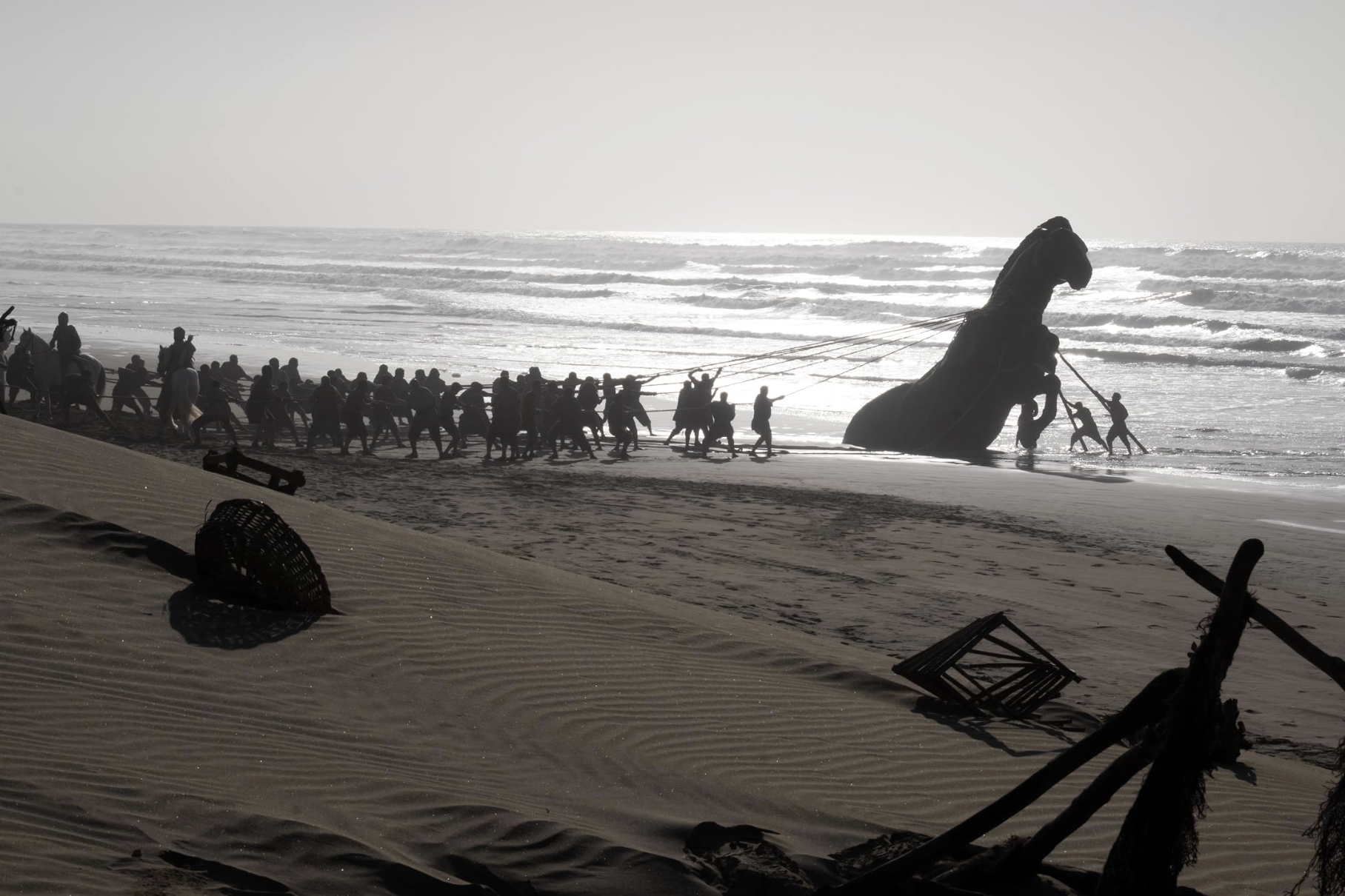
![Hollywood's $250 million blockbuster, The Odyssey becomes the latest flashpoint in Africa's 50-year territorial conflict. [Source: Melinda Sue Gordon/Universal Pictures]](https://ocdn.eu/pulscms/MDA_/e6c8b529e5d6fc15d993fc76c41aa338.png)
Christopher Nolan's The Odyssey, a $250 million Hollywood epic and the most expensive film of the acclaimed director's career, has become an unexpected focal point in one of Africa's longest-running territorial disputes after scenes were filmed in Western Sahara.
- Christopher Nolan's film The Odyssey, with a $250 million budget, was partly filmed in Western Sahara, drawing attention to the disputed territory.
- FiSahara and other critics argue that filming in Moroccan-controlled Western Sahara without Sahrawi consent legitimizes Morocco's claim to the territory.
- Western Sahara remains one of Africa's longest territorial disputes, with Morocco and the Polisario Front both contesting sovereignty.
- The dispute involves international actors: the US backs Morocco's sovereignty, while the UN and EU support a UN-led process for self-determination.
The controversy has thrust the disputed region back into the global spotlight, highlighting how international entertainment, investment, and geopolitics increasingly intersect on the African continent.
The film was shot across multiple countries, including Greece, Italy, Iceland, Scotland, Morocco and Western Sahara.
The production which is estimated to have cost around $250 million, making it the largest budget of Nolan’s career, was released on July 17 and has been marketed as one of Hollywood’s biggest cinematic events of the year.
DON'T MISS THIS: U.S. finally steps in to ease Morocco-Algeria rift over Western Sahara as Russia’s influence wanes in North Africa
Part of the filming took place at the White Dune near the city of Dakhla, a scenic stretch where the Sahara Desert meets the Atlantic Ocean. The area has become a magnet for kitesurfers, birdwatchers and tourists, and Moroccan authorities have promoted it as an emerging international tourism destination.
FiSahara leads criticism of production
Critics, however, say the location choice carries significant political implications.
Among the most vocal is FiSahara, the Western Sahara International Film Festival, an advocacy-focused festival held in Sahrawi refugee camps in Algeria that uses cinema to raise awareness of the Western Sahara conflict and amplify Sahrawi voices.
The organization argues that filming in Moroccan-controlled Western Sahara without the consent of the Sahrawi people helps normalize Morocco's administration of a territory whose final status remains unresolved under international law.
FiSahara led an open letter signed by filmmakers, actors, and human rights advocates calling on Christopher Nolan and Universal Pictures to engage with the Sahrawi perspective, warning that high-profile productions risk legitimizing Morocco's control over the disputed territory.
DON'T MISS THIS: Morocco to weaponize its top industry in strengthening its grip on the disputed Western Sahara
As of publication, neither Nolan nor Universal Pictures has publicly responded to the criticism.
Why Western Sahara remains one of Africa's most enduring disputes
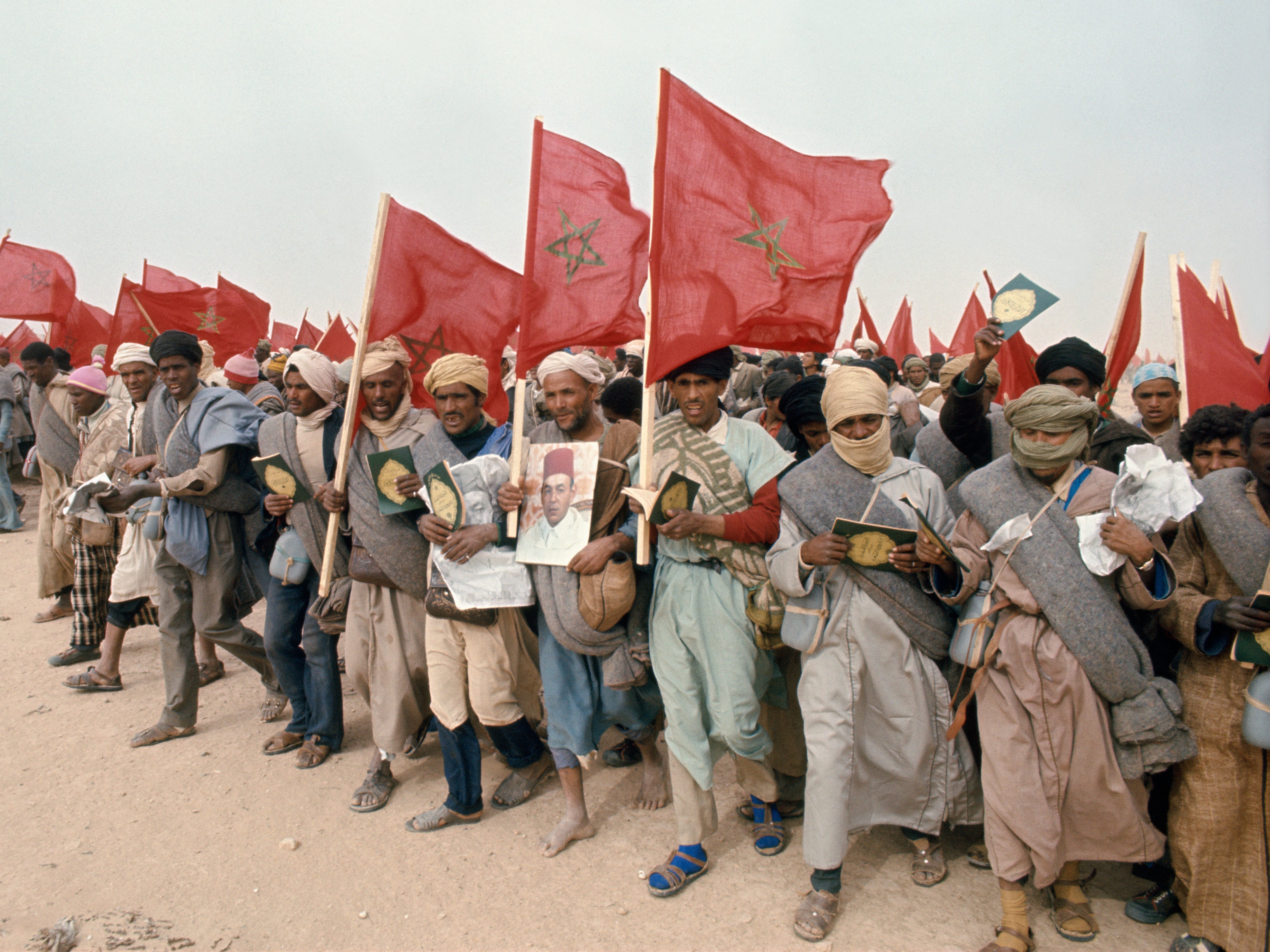
Western Sahara, a vast territory on Africa's Atlantic coast rich in phosphate reserves and fisheries, was a Spanish colony until 1975. When Spain withdrew, Morocco and Mauritania laid claim to the territory, while the Polisario Front sought independence for the Sahrawi people.
Morocco organized the Green March in 1975, and armed conflict followed. Mauritania withdrew its claims in 1979, after which Morocco took control of most of the territory. Today, Morocco administers about 80% of Western Sahara, while the Algeria-backed Polisario Front controls sparsely populated areas east of a sand berm and continues to seek independence through the self-declared Sahrawi Arab Democratic Republic (SADR).
A UN-brokered ceasefire in 1991 established the United Nations Mission for the Referendum in Western Sahara (MINURSO) to oversee a planned vote on self-determination, but disagreements have prevented the referendum from taking place. Low-intensity fighting resumed in 2020 after clashes near the Guerguerat crossing.
DON'T MISS THIS: Western Sahara conflict builds up as Morocco gains support from the UK
The dispute has also drawn in global powers. The United States recognized Morocco's sovereignty over Western Sahara in 2020, while France and Spain have backed Morocco's autonomy plan.
The United Nations and the European Union, however, continue to support a UN-led political process and do not formally recognize Moroccan sovereignty over the territory.
A Hollywood production with geopolitical consequences
For Morocco, the arrival of one of Hollywood’s most high-profile productions represents another milestone in its efforts to position Dakhla as a hub for tourism, renewable energy, logistics and international investment.
For critics, it is a reminder that global business and culture can become intertwined with unresolved questions of sovereignty and identity.
The controversy surrounding The Odyssey demonstrates how a film budgeted at a quarter of a billion dollars can extend its influence far beyond the box office.
While audiences around the world watch Odysseus navigate ancient conflicts and distant lands, the movie's production has inadvertently drawn fresh attention to a modern dispute that has shaped North Africa for half a century.