
Former Par Funding CEO LaForte And Lawyers Allege Even Judge Was Biased
By Milton Allimadi Photos: YouTube Screenshots|Wikimedia Commons Former Par Funding CEO Joseph LaForte and his lawyers claim that overcoming the SEC enforcement action that ultimately placed the company into receivership six years ago was a daunting task because, they argue, even the federal judge presiding over the case in the Southern District of Florida was not open-minded. LaForte and his lawyers contend that U.S. District Judge Rodolfo A. Ruiz II demonstrated alleged bias throughout the proceedings. They point to a motion seeking the judge’s recusal, filed on June 23, 2021, by LaForte and his co-defendants—his wife, Lisa McElhone, and former Chief Operating Officer Joseph Cole Barleta. Judge Ruiz denied the motion. This is the motion. The recusal motion catalogued numerous instances that, according to the defendants, demonstrated that the court had prejudged the case and repeatedly adopted the receiver’s narrative while denying the defense a meaningful opportunity to respond. Black Star News has been publishing a continuing series based on a review of court documents in the Par Funding case. A Google search today reveals numerous headlines describing the former Philadelphia merchant cash advance company as a Ponzi scheme. However, in a recent article in this series, an SEC spokesperson made clear that the agency itself did not view Par Funding as a Ponzi scheme. Ironically, the recusal motion suggests that Judge Ruiz appeared even more determined than the SEC to characterize Par Funding as a Ponzi scheme. LaForte and his lawyers argue that this repeated characterization unfairly demonized the company, prejudiced public opinion against the defendants, and undermined any defense they sought to present. They cite this as one of several examples of alleged judicial bias. The SEC, through a spokesperson, declined to comment when contacted by Black Star News Tuesday. The defendants also argued that, even after they submitted an expert report concluding that Par Funding had been “erroneously” characterized as a Ponzi scheme, Judge Ruiz declined to reconsider earlier conclusions that had been based on a report prepared by Development Specialists Inc. (DSI), the consulting firm retained by court-appointed receiver Ryan Stumphauzer. Par Funding was placed into receivership in 2020. LaForte later pleaded guilty to criminal charges related to the case in 2025 and is now serving a 15 1/2-year prison sentence. According to the recusal motion, Judge Ruiz allowed the receiver to withhold key financial records for months, preventing defense experts from rebutting what the defendants described as misleading claims by the receiver and DSI—claims they argued closely mirrored allegations advanced by the SEC. The defendants also maintained that the court denied defense counsel equal time to respond to the receiver’s presentations while permitting the receiver to present facts and legal arguments without prior notice to the defense. “What should have been a three-party exchange among the parties and the court devolved into a two-party dialogue with the court seemingly accepting every word uttered as not just accurate, but irrefutable while ignoring defendants’ pleas for access to the documents and an equal opportunity to be heard,” defense counsel wrote, referring to a May 20, 2021, status conference. “Over the defendants’ objections, the court vouched for the receiver and DSI, the receiver’s third-party vendor,” the motion added. DSI produced a report concluding that Complete Business Solutions Group (CBSG), Par Funding’s parent company, operated an unsustainable business model. LaForte and his lawyers later submitted the Glick Report, prepared under Generally Accepted Accounting Principles (GAAP), which used the same underlying financial records reviewed by DSI but reached the opposite conclusion. The Glick Report found that CBSG was a highly profitable company and challenged DSI’s methodology as fundamentally flawed. Judge Ruiz also said Par Funding had painted “a rosy picture” that “the numbers don’t support.” LaForte and his lawyers say that, six years later, the numbers have, in fact, added up. Investors have been repaid about $200 million, while the receivership itself has billed the Par Funding estate about $30 million. LaForte and his lawyers argue that the repayments validate the conclusions of the Glick Report. They have also maintained that the $30 million in receivership fees—equal to about 15% of the amount repaid to investors—is excessive. Stumphauzer has not responded to several e-mail messages from Black Star News seeking comment about the fees. DSI has billed about $14 million of the $30 million, according to the receiver’s court-mandated quarterly filings. In the motion to recuse, the defendants challenged several claims made by the receiver, including the assertion during an Oct. 7, 2020, status conference that CBSG was financially unsound
 Black News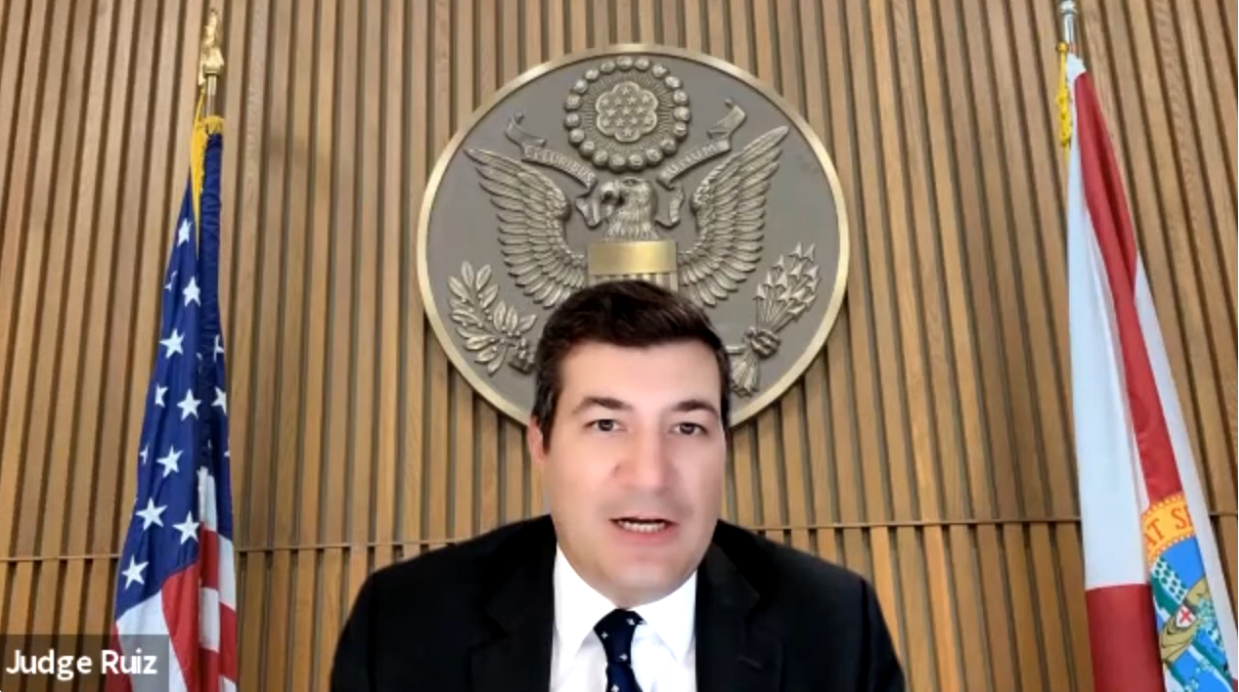

By Milton Allimadi
Photos: YouTube Screenshots|Wikimedia Commons
Former Par Funding CEO Joseph LaForte and his lawyers claim that overcoming the SEC enforcement action that ultimately placed the company into receivership six years ago was a daunting task because, they argue, even the federal judge presiding over the case in the Southern District of Florida was not open-minded.

LaForte and his lawyers contend that U.S. District Judge Rodolfo A. Ruiz II demonstrated alleged bias throughout the proceedings. They point to a motion seeking the judge’s recusal, filed on June 23, 2021, by LaForte and his co-defendants—his wife, Lisa McElhone, and former Chief Operating Officer Joseph Cole Barleta. Judge Ruiz denied the motion. This is the motion.
The recusal motion catalogued numerous instances that, according to the defendants, demonstrated that the court had prejudged the case and repeatedly adopted the receiver’s narrative while denying the defense a meaningful opportunity to respond.
Black Star News has been publishing a continuing series based on a review of court documents in the Par Funding case. A Google search today reveals numerous headlines describing the former Philadelphia merchant cash advance company as a Ponzi scheme.
However, in a recent article in this series, an SEC spokesperson made clear that the agency itself did not view Par Funding as a Ponzi scheme.
Ironically, the recusal motion suggests that Judge Ruiz appeared even more determined than the SEC to characterize Par Funding as a Ponzi scheme. LaForte and his lawyers argue that this repeated characterization unfairly demonized the company, prejudiced public opinion against the defendants, and undermined any defense they sought to present. They cite this as one of several examples of alleged judicial bias.
The SEC, through a spokesperson, declined to comment when contacted by Black Star News Tuesday.
The defendants also argued that, even after they submitted an expert report concluding that Par Funding had been “erroneously” characterized as a Ponzi scheme, Judge Ruiz declined to reconsider earlier conclusions that had been based on a report prepared by Development Specialists Inc. (DSI), the consulting firm retained by court-appointed receiver Ryan Stumphauzer.

Par Funding was placed into receivership in 2020. LaForte later pleaded guilty to criminal charges related to the case in 2025 and is now serving a 15 1/2-year prison sentence.
According to the recusal motion, Judge Ruiz allowed the receiver to withhold key financial records for months, preventing defense experts from rebutting what the defendants described as misleading claims by the receiver and DSI—claims they argued closely mirrored allegations advanced by the SEC. The defendants also maintained that the court denied defense counsel equal time to respond to the receiver’s presentations while permitting the receiver to present facts and legal arguments without prior notice to the defense.
“What should have been a three-party exchange among the parties and the court devolved into a two-party dialogue with the court seemingly accepting every word uttered as not just accurate, but irrefutable while ignoring defendants’ pleas for access to the documents and an equal opportunity to be heard,” defense counsel wrote, referring to a May 20, 2021, status conference.
“Over the defendants’ objections, the court vouched for the receiver and DSI, the receiver’s third-party vendor,” the motion added.
DSI produced a report concluding that Complete Business Solutions Group (CBSG), Par Funding’s parent company, operated an unsustainable business model.
LaForte and his lawyers later submitted the Glick Report, prepared under Generally Accepted Accounting Principles (GAAP), which used the same underlying financial records reviewed by DSI but reached the opposite conclusion. The Glick Report found that CBSG was a highly profitable company and challenged DSI’s methodology as fundamentally flawed.
Judge Ruiz also said Par Funding had painted “a rosy picture” that “the numbers don’t support.”
LaForte and his lawyers say that, six years later, the numbers have, in fact, added up.
Investors have been repaid about $200 million, while the receivership itself has billed the Par Funding estate about $30 million. LaForte and his lawyers argue that the repayments validate the conclusions of the Glick Report. They have also maintained that the $30 million in receivership fees—equal to about 15% of the amount repaid to investors—is excessive. Stumphauzer has not responded to several e-mail messages from Black Star News seeking comment about the fees. DSI has billed about $14 million of the $30 million, according to the receiver’s court-mandated quarterly filings.
In the motion to recuse, the defendants challenged several claims made by the receiver, including the assertion during an Oct. 7, 2020, status conference that CBSG was financially unsound before the receivership; that the receivership’s efforts to collect accounts receivable were hampered by poor underwriting and bookkeeping, which the co-defendants noted also mirrored allegations in the SEC complaint; that reloads—new cash advances issued while an existing advance remained outstanding—were improperly used to “artificially prop up merchant deals”; and that additional infusions of investor capital would be required to sustain the business.
The receiver, relying on DSI’s analysis, also claimed that because of the reloads, “the actual money received by CBSG daily was not” $1.5 million but “a lot less,” and that the default rate exceeded 1.2%—another allegation the co-defendants noted also appeared in the SEC complaint.

After having “fully adopted the receiver’s presentation,” the motion to recuse states, Judge Ruiz rebuked the defendants for “a misrepresentation of what was happening” at CBSG and accused them of presenting “fiction” and “myth” regarding the company’s profitability. Judge Ruiz concluded that, although CBSG appeared to be bringing in $1.2 million a day, because of the reloads it was actually “bringing in a lot less, 10 cents on the dollar almost….” The judge also remarked, according to the motion, that CBSG was pursuing “a figment of investor imagination.”
The court went further, the filing added, accusing the defendants of pursuing a “‘figment of investor imagination’ [in which] everyone here thinks that this all came to a halt when the SEC, the receiver, and the court got involved.” Judge Ruiz also “embellished the receiver’s excuses for failing to replicate CBSG’s profitability,” the motion stated, by remarking: “The receiver is not going to show up at your storefront with a baseball bat asking for money….”
Bettina Schein, one of the defendants’ attorneys, said CBSG employed more than 12 accountants and maintained a QuickBooks system containing extensive information about merchants’ accounts, including how much of each payment represented principal and how much represented factoring fees. Schein said the company was collecting approximately $1.5 million in fees each day as of July 2020, even during the pandemic. She also “described CBSG’s successful, profitable relationship with some of the top 10 merchants critiqued by the receiver as ‘fact’ and not ‘spin,'” according to the motion.
“Before any other defense attorney could speak, the court rejected this argument out of hand,” the motion continued. “After suggesting that defense counsel were engaging in more ‘narrative’ by falsely suggesting that the SEC and the receiver ‘have gummed up an otherwise very successful company,'” Judge Ruiz turned to the receiver’s counsel “and invited counsel to disagree with the defense.”
According to the motion, Judge Ruiz said: “What I just heard from Ms. Schein, Mr. Alfano, I think you would agree is not what the receiver has uncovered in their diligence?”
“When the court next allowed Ms. Schein an opportunity to speak,” the motion continued, “it limited her to one minute.” Judge Ruiz also said he wanted investors to “understand as much as they can about what’s going on at the ground level,” adding, “So I don’t need another view, your view, of the financials.”
The motion argued that Judge Ruiz had effectively adopted DSI’s non-GAAP analysis as definitive. According to the filing, the judge said: “I do not want the receiver spending any money presenting any supplemental reports or clarifying the reports when faced with any sort of defense response.”
The declaration of Bradley Sharp, the CEO of DSI, filed by receiver Stumphauzer, “characterized CBSG as financially unsound” and, without using the actual phrase, “averred that CBSG was a Ponzi scheme.”
According to the motion, the DSI Report was uploaded to the court’s electronic docket on Dec. 13, 2020, only two days before a scheduled status conference. Although the defendants “immediately moved to postpone the conference,” Judge Ruiz denied the request.
The motion states that although Judge Ruiz acknowledged the defendants’ objections to DSI’s “flawed methodology” during the Dec. 15, 2020, status conference, he nevertheless “immediately embraced the DSI report as true.”
“Relying on the DSI Report ‘by my receiver, an officer of the court,'” the motion states, Judge Ruiz then “openly pronounced CBSG’s business a ‘Ponzi’ scheme even though the SEC had not alleged as much in its filings.”
Judge Ruiz declared that the DSI Report established that CBSG “was not a self-funding operation, meaning this operation could not, regardless of COVID-19, regardless of the SEC’s involvement, that this was truly not a self-engineered or self-funding enterprise; it thrived off money being put in from investors.”

“When the SEC first addressed the issue of a Ponzi scheme, it advised the court that it ‘did not have enough evidence’ to support such a claim,” the motion to recuse states. Even after hearing Stumphauzer’s presentation, the SEC indicated that its own accountants would review the financial records. According to the motion, Judge Ruiz appeared more eager than the SEC to characterize Par Funding as a Ponzi scheme, remarking that “…the SEC got the receiver here with me” and that “now the SEC couldn’t run further away from the receiver.”
According to the motion, Judge Ruiz also stated: “I read Sharp’s report, and, I mean, as Mr. Stumphauzer put it eloquently, there are many definitions of a Ponzi scheme. Well this court knows a couple and taking from Peter to pay Paul is one of them, and that is what it said in Sharp’s entire report. Now you [SEC] don’t want to call it that.”
Eventually, the motion notes, Judge Ruiz allowed the defendants to rebut the Sharp Report with the Glick Report, or Glick Declaration, prepared by forensic accountant Joel D. Glick.
“Using the same accounting records DSI reviewed, which finally had been made available to the defense,” the motion states, “Mr. Glick concluded that the Sharp report applied a methodology that was fundamentally flawed and misleading, contrary to GAAP principles, and reached specific conclusions that were false.”
Receiver Stumphauzer did not respond Tuesday to an e-mail message from Black Star News seeking comment on why the DSI Report was adopted over the Glick Report.
The Glick Report was prepared by forensic accounting specialist Joel D. Glick, a director at Miami-based Berkowitz Pollack Brant Advisors, and submitted to the court on April 15, 2021.
The report examined financial records from 2012 through 2019, including ACH payment streams, QuickBooks data, and bank accounts. It concluded that merchant cash flows were sufficient to cover both principal and interest payments made to investors.
“DSI’s use of a cash analysis as a proxy for profitability or earnings disregards U.S. Generally Accepted Accounting Principles,” the Glick Report stated.
Under GAAP, companies typically use accrual accounting, which matches revenues with the expenses incurred to generate them during the same accounting period. “The accrual basis results in a more accurate financial picture over the long run,” the declaration stated.
Using that methodology, Glick concluded that Par Funding was profitable, generating hundreds of millions of dollars in revenue that, he said, DSI failed to account for properly in its analysis.
“Notwithstanding its pledge to reassess the DSI report for problems with the methodology or other mistakes brought to light by the defense report,” the motion to recuse concludes, Judge Ruiz “engaged in no such reassessment or reevaluation and simply shrugged off the entire incident as ‘old ground.'”