Africa’s most powerful military expected to become 4th member of NATO-style defence pact with Turkey, Saudi Arabia and Pakistan
Egypt, Africa’s most powerful military force, could join a new defence alliance formed by Turkey, Saudi Arabia and Pakistan, potentially extending an emerging security bloc into a continent already facing a growing military build-up in its north.
 Black News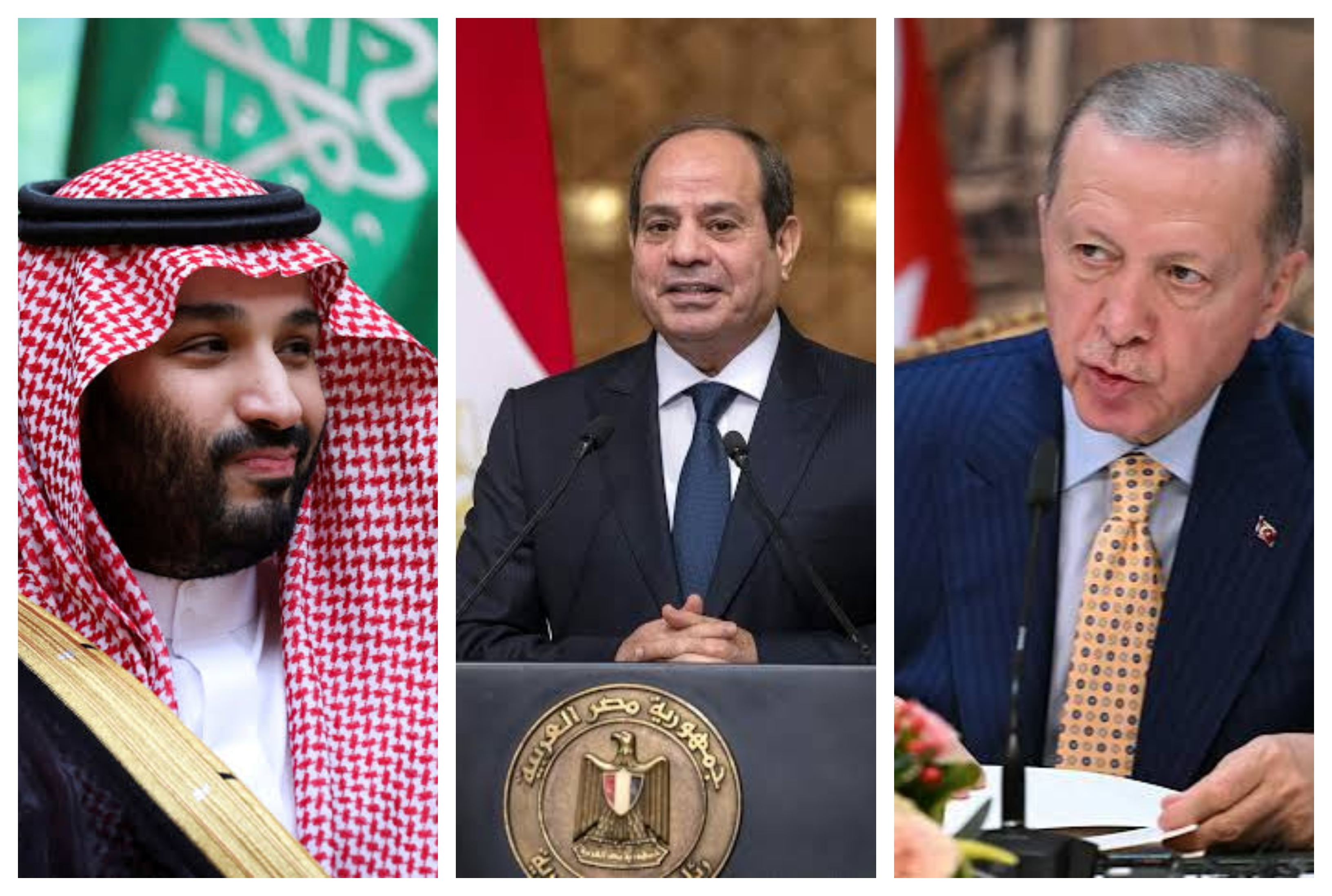


Egypt, Africa’s most powerful military force, could join a new defence alliance formed by Turkey, Saudi Arabia and Pakistan, potentially extending an emerging security bloc into a continent already facing a growing military build-up in its north.
- Turkey, Saudi Arabia, and Pakistan have formed a new defense alliance via the Mecca Joint Defence Agreement, with Egypt considered a likely future member.
- The alliance's collective defense commitment is similar to NATO's Article 5, aiming to strengthen deterrence and collective security rather than target any specific state.
- Egypt's inclusion would significantly bolster the alliance, as it is Africa's most powerful military force and occupies a strategic regional position.
- The regional security landscape is increasingly competitive, with Algeria and Morocco expanding their military capabilities and forging strong external alliances.
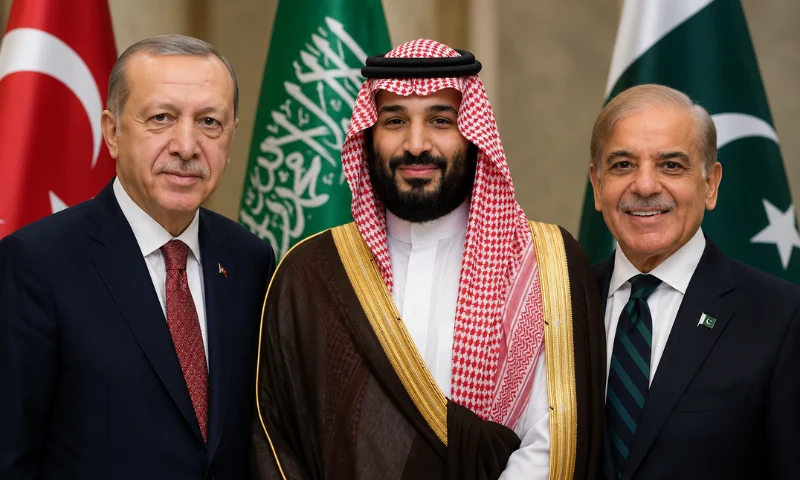
Turkey, Saudi Arabia and Pakistan signed the Mecca Joint Defence Agreement in the Saudi holy city on August 7, 2026, pledging to treat an armed attack against one member as an attack against all three.
However, the three countries do not appear content with limiting the alliance to its founding members, with discussions already pointing towards further expansion.
The countries presented the agreement as a defensive arrangement aimed at strengthening deterrence and collective security rather than targeting a particular state. The deal followed two years and eight months of negotiations.
Even before the meeting, Pakistani Foreign Ministry spokesman Tahir Andrabi signalled that the discussions would go beyond the immediate security tensions in the Gulf.
“Although taking place against the backdrop of heightened tensions in the Gulf, the visit will carry significance beyond the immediate crisis and short-term considerations,” Andrabi said.
Now, Turkish Foreign Minister Hakan Fidan has identified Egypt as a possible next member of the alliance.
“I believe that at the next stage Egypt will also be among us in the alliance. We already act toward one another as if we were alliance members,” Fidan said.
“There are a few technical issues. Once these are implemented, there is no reason for Egypt not to be part of it.”
Egypt’s possible entry comes at a time when shifting military relationships are reshaping the security balance across North Africa.
The long-running rivalry between Algeria and Morocco has fuelled one of the continent’s most significant military build-ups.
Morocco has strengthened its defence relationship with the United States and expanded its acquisition of Western military systems.
Algeria, meanwhile, retains close military ties with Russia and has continued modernising its armed forces with advanced Russian equipment.
Reports in 2026 indicated that Algeria had become the first foreign operator of Russia’s Su-57 stealth fighter, adding another layer to the military competition in North Africa.
Against this backdrop, Egypt has an increasing strategic incentive to broaden its defence partnerships beyond security networks dominated by the United States, Russia and China.
A new defence bloc reaches Africa
Egypt already coordinates with Turkey, Saudi Arabia and Pakistan through the R4 diplomatic framework, giving the four countries an existing platform for closer political and security cooperation.
Its admission would give the new alliance substantial African weight. The 2026 Global Firepower ranking places Egypt first in Africa and 19th globally.
Egypt also occupies a critical strategic position linking North Africa, the Middle East, the Mediterranean and the Red Sea. It controls the Suez Canal, one of the world's most important maritime trade routes.
Fidan said the agreement’s collective-defence provision was technically comparable to NATO’s Article 5.
“NATO is a giant military alliance where there are 32 countries. We have started here as three countries and we have to take very humble but concrete steps,” Fidan said.
The alliance plans to establish a ministerial committee and a general secretariat based in Saudi Arabia. Members would consult to determine the nature and scale of assistance if one of them came under attack.
More importantly, Turkey has made clear that the three-country arrangement is intended to grow.
“Our president's vision is that we don't remain limited to three countries, that we grow and bring together all (regional) countries under this roof,” Fidan said.
Egypt’s entry would therefore turn the Turkey-Saudi Arabia-Pakistan arrangement into a broader defence grouping with Africa’s strongest military as one of its key members.
Fidan, however, rejected suggestions that the pact was established against Iran or another specific country.
“There is no common threat that we have put in writing,” he said.